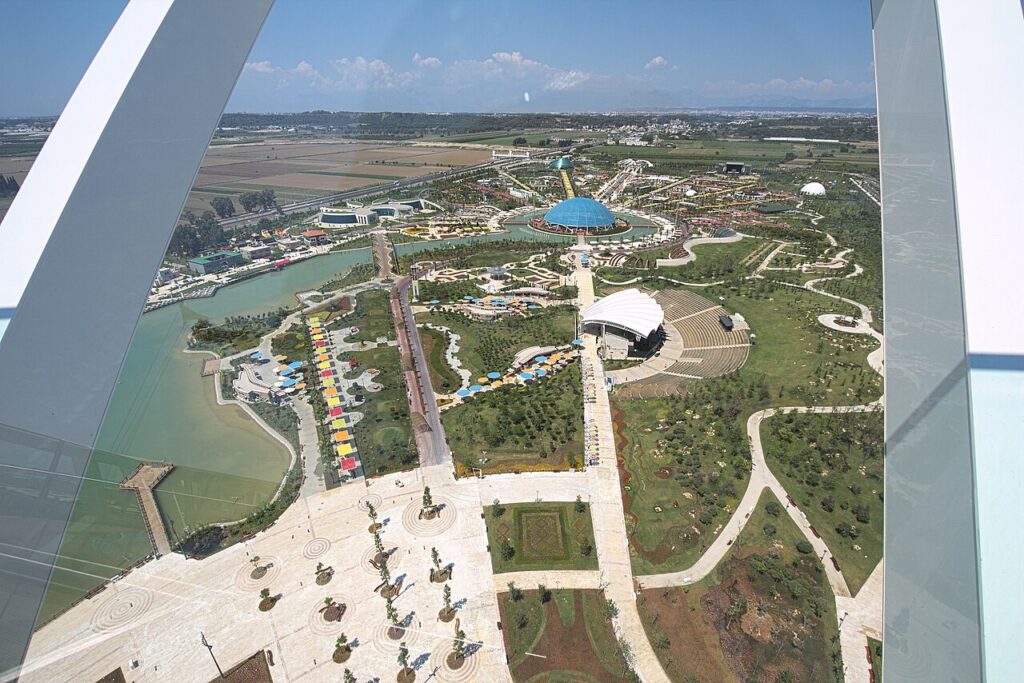
By Sunday morning in Antalya, the clearest sign of how long COP31 had run wasn’t on any screen in the plenary hall. It was in the corridors. Reuters reported that catering outlets and exhibits at the venue had already been dismantled, while negotiators were still arguing over the words that are supposed to guide the world’s climate response for the next year.
The summit was meant to close on Friday 20 November. Instead, in the small hours of Sunday, two days late, COP31 President Murat Kurum put a fresh package on the table and told delegates it was “a text which all the parties can agree upon.” Then he gave them a few hours to object.
I’ve been following these talks every day on this site, from the opening in Antalya to the moment fossil fuel language vanished from the draft and the overtime standoff. But this latest text contains a sentence that deserves its own story. If it survives, it would be the first time a COP decision admits, in black and white, that the world is on course to blow past 1.5°C.
The sentence nobody wanted to write
According to Reuters, the new draft would acknowledge for the first time that warming is on track to exceed the 1.5°C limit. It then pairs that admission with a call to speed up the development of carbon-removal technologies, so that the overshoot can eventually be reversed.
Read that twice. For a decade, 1.5°C has been the North Star of climate diplomacy and of climate communication. It’s on placards, in strategies, in every keynote. Now the official process is preparing to say, in effect: we’re going to miss it, and we’ll try to come back down later.
That isn’t a surprise to scientists. The UN has said the world will likely exceed 1.5°C. What’s new is the willingness to write it into a negotiated text that nearly 200 countries are asked to sign off.
The admission is honest. What it is paired with is the fight.
What’s in the draft, and what isn’t
Here is the shape of the package, based on Reuters and Al Jazeera reporting from Antalya on 22 November:
- Overshoot acknowledged: warming is on course to exceed 1.5°C, a first for a COP text if adopted.
- Carbon removal promoted: faster development of technologies to pull carbon back out of the atmosphere.
- Fossil fuels unnamed: no explicit mention of oil, gas or coal. Instead, the text refers back to an earlier COP decision on transitioning away from them.
- Open questions: how hard countries should work to wean themselves off fossil fuels, whether to encourage industrial carbon capture and storage, and whether scaling up electricity should rely only on renewables or also on gas and coal.
The journey to this point matters. Australia, which leads the negotiations while Turkey hosts, tabled an opening draft on Monday 16 November that called for a faster fossil fuel phase-out. By Thursday, a slimmer version had removed every mention, after Saudi Arabia and other major oil and gas producers objected, Al Jazeera reported. Observers told Reuters the same producers pushed to keep fossil fuels out and carbon removal in. A Saudi delegation representative declined to comment.
In one week, the text went from “phase out” to “remove it later.”
Why carbon removal is the word to watch
Carbon removal isn’t a dirty word on its own. Restoring forests and mangroves removes carbon, and some engineered approaches may play a role in the long run. The problem is the job it is being given in this text.
Critics argue that leaning on removal technologies, which are expensive and unproven at scale, creates a licence to keep drilling today and promise a clean-up tomorrow. Sara Shaw of 350.org told Reuters that the draft opens the door to more fossil fuel development.
The anger in the room was audible. Tuvalu’s climate minister, Maina Talia, told Reuters: “It seems like we are negotiating with the Saudis.” Former German climate minister Jennifer Morgan said the presidency had ignored the views of 150 countries and tabled a very weak text. Before the final draft landed, a letter from 100 civil society groups warned Turkey and Australia they were on course to preside over one of the most disappointing COPs ever.
Meanwhile, Kurum insisted there was broad support. Reuters quoted him describing a large majority consensus and compromise on the horizon. At the time of writing, the package had not been formally approved, and several delegations, speaking anonymously, had raised the prospect of leaving without a deal at all.
A promise to clean up later is only as good as the people who will be left holding the mop.
What this means for Kenya and Africa
For African negotiators, overshoot isn’t an abstract curve on a chart. Every tenth of a degree above 1.5°C means more drought in the north of Kenya, more flooding in our towns, more pressure on farmers who did almost nothing to cause the problem.
Kenya came to Antalya with a clear brief. The delegation, led by Environment Cabinet Secretary Deborah Barasa, prioritised adaptation finance, climate resilience, renewable energy and access to international climate funds, The Standard reported. The African Group of Negotiators wanted the Global Goal on Adaptation to come with clearer indicators and a credible path to more adaptation finance. Its chair, Nana Dr Antwi-Boasiako Amoah, said Africa’s success would be measured by how effectively it shapes the outcome, not how often it speaks.
Here’s the uncomfortable link. If the world officially accepts overshoot, the need for adaptation money goes up, not down. An overshoot world is an adaptation-hungry world. That makes the finance fight, which I unpacked in our adaptation finance explainer, more urgent than ever.
Kenya also has a story the world should hear in this moment. More than 81% of the electricity Kenya generated in the financial year to June 2026 came from renewables, according to EPRA figures cited by The Standard. Yet only 77% of Kenyans had electricity access in 2024, per the World Bank. We are proof that clean power is possible, and proof that clean power without finance leaves people in the dark.
Africa can’t afford a “fix it later” climate deal, because Africa is where “later” arrives first.
What to watch next
- Whether the gavel falls. Will the package be adopted as drafted, strengthened at the last minute, or will Antalya end without a deal? Don’t assume any of these until it happens.
- The exact overshoot wording. Does it commit to bringing temperatures back below 1.5°C, and by when, or simply note the overshoot?
- How carbon removal is framed. As a complement to cutting emissions, or as a substitute for it? The difference is everything.
- Adaptation commitments. Kurum said concerns about helping developing countries finance adaptation had been addressed. African negotiators will judge that by numbers and indicators, not adjectives.
- The road to Addis Ababa. COP32 heads to Ethiopia in 2027. Whatever Antalya fails to settle lands on an African stage.
The takeaway for communicators and event planners
The overshoot admission changes how we talk about climate. For years, many organisations have built campaigns around “keeping 1.5 alive.” If the official process now concedes the overshoot, that message needs an honest update, without sliding into doom.
Three practical moves:
- Retire the pass/fail framing. 1.5°C isn’t a cliff edge where effort stops mattering. Every tenth of a degree avoided means less harm. Say that plainly.
- Interrogate “removal” language. When a partner, sponsor or speaker leans on carbon removal, ask the follow-up: alongside deep emissions cuts, or instead of them? Audiences can tell the difference.
- Put adaptation and people at the centre. Overshoot makes resilience stories, from farmers to coastal towns, the most relevant climate stories of the next decade.
This is exactly the kind of moment I help organisations navigate, whether that’s moderating a post-COP panel that gets past the headlines or shaping a campaign that stays credible when the targets shift. If you’re planning a COP31 debrief or a road-to-COP32 event, get in touch about speaking or moderation, or see how I work as a climate influencer and storyteller. And from 2027, communicators who want to build these skills properly can learn with me through ImpactComms.
For the latest from the negotiating floor, see Al Jazeera’s report on the overtime impasse and The Standard on Kenya and Africa’s priorities.
Frequently asked questions
What does “overshoot” of 1.5°C mean?
Overshoot means global warming temporarily rises above the 1.5°C limit set in the Paris Agreement, with the hope of bringing it back down later. The COP31 draft would be the first COP text to acknowledge the world is on course for this.
Why is carbon removal controversial at COP31?
Supporters see it as a way to reverse overshoot, but critics say the technologies are expensive and unproven at scale. They warn that relying on them could justify continued oil and gas development instead of cutting emissions now.
What does the COP31 outcome mean for Kenya?
A world that overshoots 1.5°C faces more severe droughts and floods, which raises Kenya’s need for adaptation finance. Kenya’s delegation prioritised adaptation, resilience, renewable energy and access to climate funds, and those issues now carry forward to COP32 in Addis Ababa in 2027.
Cover photo: Hendric Stattmann via Wikimedia Commons (CC BY-SA 4.0)
Join the conversation
No comments yet. Share your perspective below.
Leave a comment

Impact communications strategist and climate storyteller. Managing Director of Reznick Communications and Founder & CEO of WeAreTELL.