On Thursday morning, under a grey Antalya sky, climate activists stood outside the COP31 venue holding up crumpled “missing cat” posters. One showed a green-eyed cat in a pink collar. Another, a ginger tabby. Both had the same name: Ambition.
According to UN News, the posters came with clues. Ambition hates overshooting 1.5°C, loves a transition away from fossil fuels, and responds to climate justice. Philippine Menager of the Ecología y Desarrollo Foundation explained that the campaign began at COP29, and that the cat has been going missing ever since.
A few hours later, the joke stopped being a joke. Mid-afternoon, the COP31 Presidency released the second draft of the summit’s main political text, the “cover decision”. The words the cat was named after were gone.
I have been following Antalya closely all fortnight, from the opening day to the 35 by 35 electrification push. Today, on the scheduled final day, I want to do something slightly different: read this draft the way a communicator reads any document. Not just for what it says, but for what it quietly stopped saying.
What the new draft cut, and what it kept
The second draft is lean. Climate Home News reports it runs to nine pages, half the length of the first version. Here is what changed, based on reporting from UN News, Climate Home News and Premium Times:
- Fossil fuels: out. The text drops explicit references to transitioning away from coal, oil and gas, including any welcome for the global roadmap on that transition prepared by Brazil’s COP30 presidency. One veteran campaigner called the omission “a glaring regression” (Climate Home News).
- Electrification: in. The emphasis shifts to clean energy and electrification, including Türkiye’s proposed goal of electricity making up 35% of global final energy consumption by 2035.
- Adaptation finance: a promise without a number. The draft reaffirms the goal of tripling adaptation finance by 2035, but leaves how to calculate that increase for later, pushing the decision to COP32. An earlier draft released on Monday had proposed tripling to at least $120 billion a year by 2035, according to Premium Times.
- 1.5°C: an honest admission. Australia’s Chris Bowen, who is leading the negotiations, said COP31 would be the first climate summit to acknowledge that the world will fail to hold warming to the Paris Agreement’s 1.5°C limit. The text calls for any overshoot to be kept as small and short as possible.
Bowen pledged to keep consultations going through the night and said negotiators would not leave Antalya until there was consensus. As of Friday, that consensus had not been announced. So everything here is a draft, and drafts change. But drafts also tell you where the pressure is.
In climate diplomacy, a deleted sentence is never an accident. It is a negotiation you lost.
The night of the Divan
The new text did not come from nowhere. On Wednesday evening, COP31 President Murat Kurum gathered ministers for a “Divan”, a political roundtable format inspired by Ottoman tradition, to try and break the deadlock. UN News reports that some described the session as constructive, while ministers from vulnerable countries said little progress had been made.
The backdrop was tense. As of Wednesday, 21 issues remained unresolved, according to the Presidency. The same day, countries launched the second Global Stocktake, the Paris Agreement’s five-yearly reality check, which concludes in 2028. UN climate chief Simon Stiell has framed the moment bluntly: two years to turn the first stocktake’s targets into real progress.
Finance, adaptation and just transition were still stuck when the new draft landed. Teresa Anderson of ActionAid International told journalists that announcements in the cover decision could not hide that the negotiations were struggling, and argued that developing countries were still being asked to do more without the money to do it.
A summit can have a beautiful headline and a broken engine. Thursday showed both.
The scorecard nobody can spin
On the same day, UN Climate Change published its Global Climate Action Agenda Yearbook, and the numbers deserve more attention than they will get in the final-day rush. The 2026 edition found:
- 44 of 96 global climate indicators moving in the right direction.
- 19 showing no progress, and 33 without enough data to judge.
- Renewable energy capacity up 17% between 2024 and 2025.
- Adaptation finance falling, from $81.5 billion in 2022 to $64.1 billion in 2024.
Read that last line again. The world is debating how to triple adaptation finance while the actual flow has shrunk by roughly a fifth in two years. That gap is the whole story for Africa.
The Presidency’s electrification package did bring real numbers to the table: activities involving more than 150 countries plus the European Union, 37 cities and over 260 businesses, more than 21,000 kilometres of grids built in 2025, and annual investment plans of at least $156 billion for grids, renewables and storage. Stiell welcomed the momentum, but stressed that vulnerable developing countries need affordable finance and technology, and that workers and communities must shape the change.
What Africa, and Kenya, should take from Antalya’s missing words
African negotiators came to Antalya with a clear ask. Before the summit, Ghana’s Antwi-Boasiako Amoah, chair of the African Group of Negotiators, requested a dedicated agenda item on tripling adaptation finance. They did not get one; the issue was folded into other discussions instead. Thursday’s draft continues that pattern: the goal survives, the number waits.
The Pan African Climate Justice Alliance (PACJA) put it in its statement, read by Augustine Njamnshi, under the title “From Promises to Proof”. PACJA called on developed countries and major emitters to say how much they will cut their fossil fuel dependence, by when, and how progress will be measured. As Premium Times reported, its statement also declared that “Africa does not seek permission to develop.”
For East Africa, this is not abstract. At COP31 on Thursday, young Ugandan activist Alison Nisima, from Kakonkoma village in the south-west, described children struggling along flooded paths to school, as fears grow that El Niño could bring further flooding to parts of the region. Her point about early warnings is one every Kenyan county disaster team should pin above their desk: a warning should give people “a fair chance to face it” (UN News).
Here is what I take from all this, as someone who works with African organisations on how they tell their climate stories:
- Electrification is a genuine opening. For a continent where hundreds of millions still lack power, a global push on grids and clean electricity is a story African governments and businesses can lead, not just receive. Kenya’s renewable-heavy grid is a credible example to bring to that table.
- But “electrify” is not a substitute for “fund”. Without a number on adaptation finance, the communities living with floods and drought are being asked to wait another year, until COP32 in Ethiopia.
- COP32 just became Africa’s homework. If the adaptation finance number is deferred to an African-hosted COP, then African negotiators, civil society and media have twelve months to make the case impossible to ignore.
Deferral is not defeat, but only if someone uses the time.
What to watch next
COP31 is scheduled to close today, Friday 20 November, but negotiators at recent summits have often worked past the deadline. I will not guess the outcome. These are the signals worth watching as the final text emerges:
- Does any fossil fuel language return? Even a reference to the COP30 roadmap would change how this summit is remembered.
- Does a number appear for adaptation finance, or does the decision formally move to COP32?
- How is the 1.5°C overshoot worded? Keeping overshoot small and short is a political promise, not a plan. Watch whether it is tied to anything measurable.
- Just transition and finance tracks: do they produce decisions, or more work programmes?
- The COP32 hand-off: what Ethiopia inherits will shape Africa’s agenda for 2027.
The communicator’s takeaway: name the cat
I keep coming back to that cat. A single poster, a pet name and a pink collar did what pages of position papers struggle to do: it made an abstract negotiating fight instantly understandable to anyone walking past. People will remember “Ambition went missing” long after they forget paragraph numbers.
That is the lesson for every organisation, NGO and event planner heading into 2027:
- Give your issue a face or a name. Adaptation finance is a spreadsheet. A child walking a flooded path to school is a story.
- Track the deletions, not just the announcements. When you brief your board, partners or audience on COP31, show what was dropped between drafts. That is where the real news is.
- Translate the jargon on stage. “Cover decision”, “Divan”, “TAFF”, “overshoot”: if your panel cannot explain these in one sentence each, your audience has already tuned out.
This is exactly the craft I bring to the stage as a speaker and conference moderator, and it is what we will be teaching from 2027 through ImpactComms, so communicators can turn negotiating texts into stories people care about. If you are planning a COP31 debrief, a road-to-COP32 convening or a climate panel that needs someone to make the complex clear, let’s talk.
Ambition is still missing. The question for Africa is who goes out looking for it next.
Frequently asked questions
What changed in the second COP31 draft cover decision?
The nine-page draft released on 19 November 2026 dropped explicit references to transitioning away from fossil fuels and emphasised electrification instead, including Türkiye’s 35 by 35 goal. It reaffirmed tripling adaptation finance by 2035 but left the calculation and figure for later, pushing that decision to COP32.
Why does the adaptation finance number matter for Africa?
African countries face growing floods and droughts and depend heavily on adaptation finance, which UN Climate Change data shows fell from $81.5 billion in 2022 to $64.1 billion in 2024. Without an agreed figure, there is no clear benchmark to hold contributors accountable.
What does the 1.5°C overshoot language mean?
Negotiators said COP31 would be the first climate summit to acknowledge that warming will exceed the Paris Agreement’s 1.5°C limit. The draft calls for any overshoot to be kept as small and short as possible.
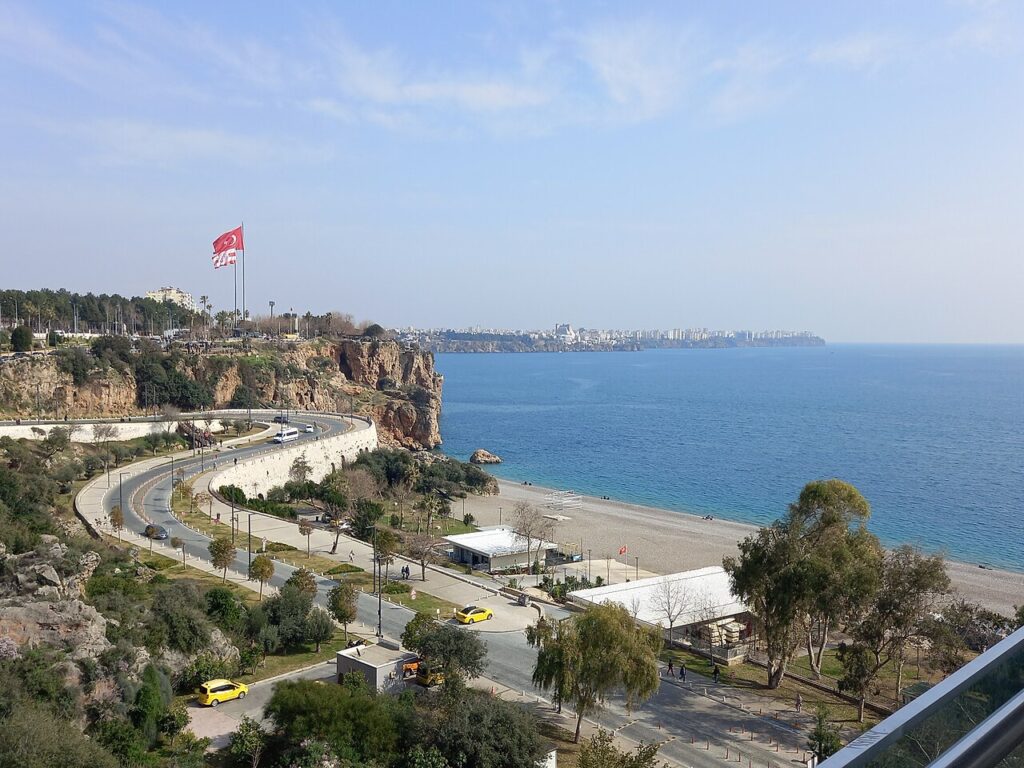
Cover photo: MrEfeS via Wikimedia Commons (CC BY-SA 4.0)
Join the conversation
No comments yet. Share your perspective below.
Leave a comment

Impact communications strategist and climate storyteller. Managing Director of Reznick Communications and Founder & CEO of WeAreTELL.