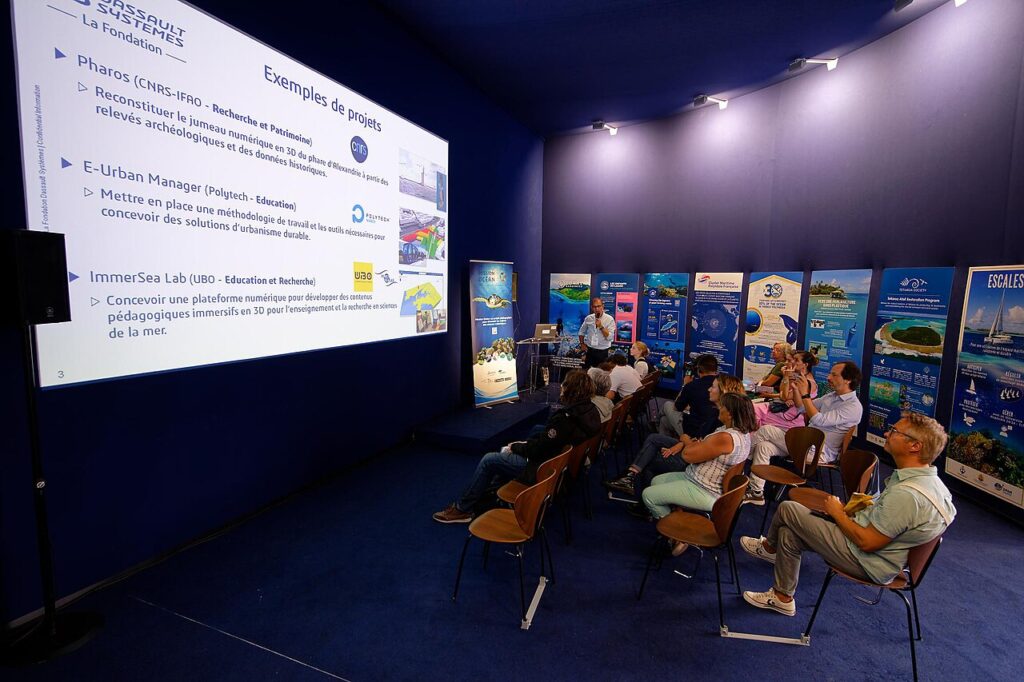
For one week in June, the French Riviera city of Nice became the capital of the ocean.
The third UN Ocean Conference, co-hosted by France and Costa Rica, closed on 13 June 2025. Heads of state, ministers, scientists, Indigenous leaders, fishers, activists and research vessels converged on a city better known for film festivals and yachts.
From the Kenyan coast, it might have looked like a distant European event. It wasn’t. The decisions and momentum from Nice will shape the future of the ocean that sustains millions of Africans.
Here are my five takeaways.
1. The High Seas Treaty came within touching distance
The Agreement on Marine Biodiversity of Areas Beyond National Jurisdiction, the High Seas Treaty, needs 60 ratifications to enter into force. Going into Nice, it was still short.
The conference produced a wave of new ratifications and commitments, putting the threshold within reach. That matters because the high seas cover roughly two-thirds of the ocean and nearly half the planet’s surface, and until now there was no comprehensive way to create protected areas there.
(The treaty did cross 60 ratifications in September 2025. I wrote about what that means.)
2. The ocean is finally being treated as a climate issue
For years, ocean and climate negotiations ran on separate tracks, as if the two weren’t intimately connected.
They are. The ocean absorbs most of the excess heat trapped by greenhouse gases and a large share of the carbon dioxide we emit. Warming waters bleach coral reefs, push fish stocks to new areas and fuel stronger storms. Rising seas threaten coastal cities and farmland.
Nice reinforced what scientists have been saying for decades: you can’t solve the climate crisis without the ocean, and you can’t protect the ocean without addressing the climate crisis.
3. Coastal communities need more than speeches
From Lamu to Kilifi to Kwale, Kenyan coastal communities depend on fisheries, mangroves and tourism. Rising seas, warming water, coral bleaching and overfishing are already shrinking livelihoods.
Global commitments matter only if they translate into support on the ground: community fisheries management, mangrove restoration, coastal resilience and fair access to ocean finance.
4. Deep-sea mining is the next big fight
One of the most charged debates in Nice was about deep-sea mining: the push to extract minerals from the ocean floor for batteries and electronics. A growing number of countries called for a moratorium or precautionary pause, arguing that we know too little about deep-sea ecosystems to risk destroying them.
Expect this to become one of the defining ocean stories of the coming years, and one with direct links to Africa’s critical minerals debate on land.
5. The ocean needs better storytellers
Here’s the problem: the ocean is vast, distant and mostly invisible. Most people will never see the deep sea, the high seas or a healthy coral reef. That makes it incredibly hard to communicate.
The best ocean stories I’ve seen do one thing well: they connect the deep blue to something human. A dinner plate. A fisher’s catch. A childhood memory of the beach. A job.
Bringing it home
Kenya’s Blue Economy ambitions are significant: fisheries, ports, shipping, tourism and more. But blue growth without blue protection is a short-term bet. Overfished waters, degraded mangroves and bleached reefs don’t sustain economies for long.
As communicators, we can help audiences see the ocean not as scenery but as infrastructure: a source of food, jobs, oxygen and climate stability.
How to tell ocean stories
Follow the fish. From the reef to the market to the plate.
Feature the fishers. Their knowledge of changing seas is as valuable as any scientific survey.
Show the hidden. Underwater footage and photography can transform how audiences relate to the ocean.
Connect to climate. Every ocean story is a climate story.
If you’re planning an ocean or blue economy event, I’d love to help shape the conversation as a moderator or speaker. See more of my climate storytelling work.
Frequently asked questions
When and where was the third UN Ocean Conference?
In Nice, France, in June 2025, co-hosted by France and Costa Rica.
Why does the ocean matter for climate?
The ocean absorbs much of the excess heat trapped by greenhouse gases and a large share of carbon dioxide emissions, and it supports the food and livelihoods of coastal communities.
Cover photo: Olivier Dugornay (Ifremer), Pôle Ifremer par le mot et l’imag via Wikimedia Commons (CC BY 4.0)

Impact communications strategist and climate storyteller. Managing Director of Reznick Communications and Founder & CEO of WeAreTELL.