Stand at the edge of a tropical forest and do the arithmetic that loggers, ranchers and miners have done for decades.
Cut it down, and the timber can be sold. The cleared land can be farmed or grazed. The minerals underneath can be mined. All of that creates income, jobs and tax revenue, now.
Leave it standing, and it does extraordinary things: stores carbon, generates rainfall for farms hundreds of kilometres away, regulates rivers, shelters biodiversity, sustains Indigenous cultures. But almost none of that shows up as income for the country that protects it.
For a long time, the arithmetic has favoured the chainsaw. The Tropical Forest Forever Facility, launched by Brazil around COP30 in Belém, is an attempt to change the maths.
How it works
The TFFF isn’t designed like a traditional aid fund that hands out grants until the money runs out. It’s designed more like an investment fund.
Here’s the basic idea:
- Sponsor countries provide long-term capital.
- That capital is used to attract much larger amounts of private investment.
- The combined fund is invested, and the returns are used to pay tropical forest countries.
- Countries receive payments for each hectare of forest they keep standing.
- Deforestation leads to deductions, so losing forest costs money.
- A share of payments is earmarked for Indigenous peoples and local communities, who are often the most effective forest guardians.
The ambition is large: tens of billions of dollars in public capital, leveraging far more from private investors, to create a permanent source of forest finance.
The launch
At the Belém leaders’ summit in November 2025, early pledges came in at around US$5.5 billion, from countries including Brazil, Norway and Indonesia. It was a solid start, and well short of the fund’s long-term target.
Why the Congo Basin should be watching
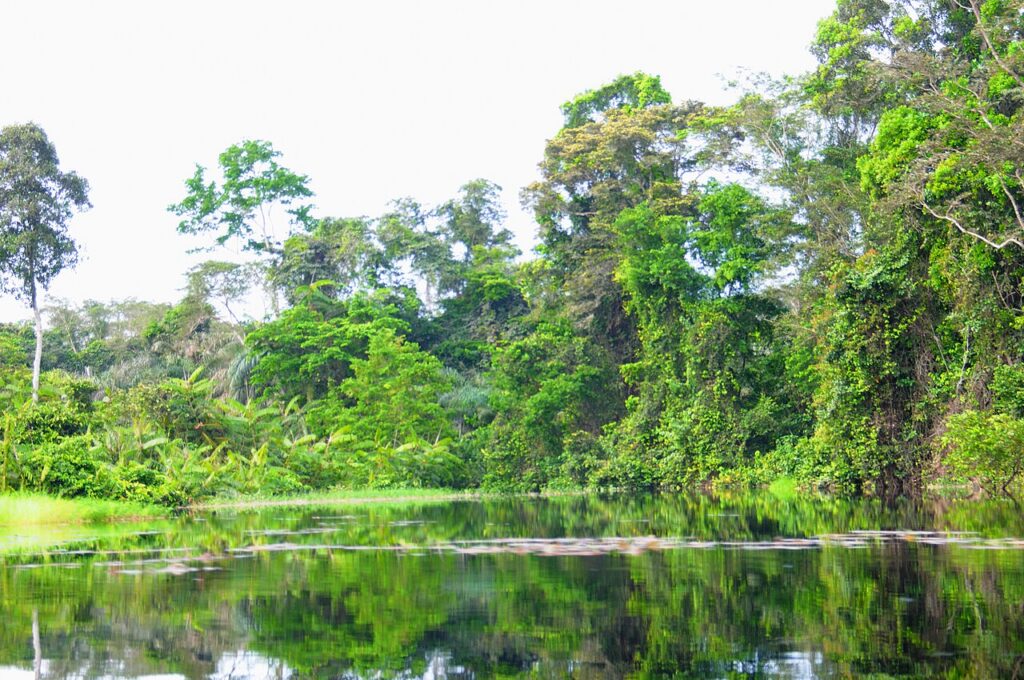
When people think of tropical forests, they often think of the Amazon. But Africa holds the Congo Basin, the world’s second-largest tropical rainforest and one of the largest remaining carbon sinks on Earth.
The Congo Basin shapes rainfall across Central and East Africa. It shelters forest elephants, gorillas and bonobos. Millions of people depend on it for food, medicine, fuel and livelihoods.
Countries like the Democratic Republic of Congo, Gabon, the Republic of Congo and Cameroon could, in principle, benefit from a mechanism that pays for keeping forests standing. For countries under heavy economic pressure, a reliable payment per hectare could change the calculation.
Kenya’s forests are smaller but critical too. The Mau, the Aberdares, Mount Kenya and Kakamega are “water towers” feeding rivers that millions of people depend on.
The questions worth asking
Good storytelling isn’t cheerleading. Here are the questions I’d want answered:
Will payments be big enough? To change behaviour, payments must compete with income from logging, mining, agriculture and cattle.
Will money reach communities? Earmarks for Indigenous peoples and local communities are promising. Delivery is what matters.
How robust is monitoring? Satellite monitoring has improved enormously, but rules must prevent gaming and protect forests that are degraded rather than fully cleared.
What about the investment risk? If the fund’s returns depend on financial markets, what happens in a downturn?
Who governs it? Forest countries need a real say in how the fund works.
How to tell forest stories
Show forests as infrastructure. Rainfall for farms, water for cities, climate stability for everyone.
Centre the guardians. Indigenous peoples and local communities are often the most effective protectors of forests. Feature them as experts and leaders.
Follow the money simply. “This much comes in, this much goes out, this much reaches communities” is a story people can follow.
Avoid “pristine wilderness” myths. Many forests have been shaped and protected by people for centuries.
If the TFFF works, it could be one of the most important climate finance innovations of the decade. If it doesn’t, the arithmetic of the chainsaw will keep winning. Either way, it’s a story worth following.
Explore my work as a climate storyteller and climate influencer, read what else COP30 delivered, or book me for your forest or nature finance event.
Frequently asked questions
What is the Tropical Forest Forever Facility?
A Brazilian-led fund launched around COP30 that invests capital and uses the returns to pay tropical forest countries for each hectare of forest they keep standing.
Could the TFFF benefit Africa?
Yes. Congo Basin countries hold vast tropical forests and could receive payments for protecting them, with a share earmarked for Indigenous peoples and local communities.
Cover photo: JosepMGracia via Wikimedia Commons (CC BY-SA 4.0)

Impact communications strategist and climate storyteller. Managing Director of Reznick Communications and Founder & CEO of WeAreTELL.