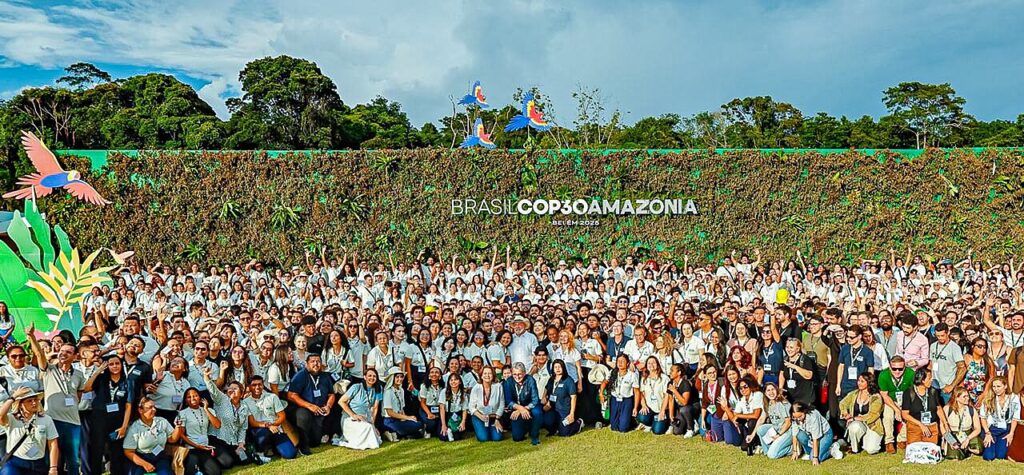
There’s a word in Tupi-Guarani, an Indigenous language of Brazil, that Brazil’s COP30 presidency placed at the centre of the summit: mutirão. It describes a community coming together to work on a shared task. Neighbours who gather to build a house, harvest a field or clear a road, side by side.
It was a beautiful idea to bring to a climate summit in the Amazon. Whether the world actually behaved like a mutirão in Belém is a more complicated question.
COP30 ran past its scheduled close on 21 November, as COPs usually do, and ended with a package of decisions that will shape climate action for the rest of the decade. Here’s what happened, without the cheerleading or the cynicism.
The headline: the Global Mutirão decision
The central political text, the “Global Mutirão” decision, acknowledged what the Emissions Gap Report had made painfully clear just before the summit: current national climate plans don’t add up to the Paris goals. It urged countries to accelerate implementation and close the gap.
It’s the kind of text that matters more for its signal than its specifics. But signals shape the next round of national plans.
What moved
Adaptation finance: a call to triple
For African countries, this was the most important outcome. Countries called for at least tripling adaptation finance by 2035.
Adaptation is the money that helps communities cope with impacts already here: drought-resilient water systems, flood defences, climate-smart agriculture, early warning systems. African negotiators have pushed for years to rebalance climate finance, which has historically flowed far more to emissions cuts than to adaptation.
The caveats are real: the target lacks a clear baseline and doesn’t say who pays how much. But it’s a reference point negotiators can now push from. (They did, in Bonn in June 2026, and it became the most contentious line in the talks.)
Adaptation indicators
Countries adopted a set of indicators to track progress on the Global Goal on Adaptation. It’s technical, but it matters. You can’t manage what you can’t measure.
A just transition mechanism
Countries agreed to develop a mechanism to support just transitions, so that workers and communities in fossil-fuel-dependent economies aren’t left behind as the world changes. For Africa, where many countries are still expanding energy access, a just transition is as much about building as about closing.
Forests
Brazil’s Tropical Forest Forever Facility launched alongside the summit with early pledges of around US$5.5 billion: an attempt to make standing forests worth more than cleared ones. I’ve written about how it works.
What didn’t move
Fossil fuels
This is the gap everyone will remember.
A large coalition of countries pushed for a roadmap to transition away from fossil fuels, building on the language agreed at COP28 in Dubai. It didn’t make it into the final decision. The presidency said it would take roadmap work forward outside the formal text.
For many observers, a COP in the Amazon that couldn’t agree a fossil fuel roadmap was a painful irony.
The ambition gap
Collective national plans still point to warming well above 1.5°C. Nothing in Belém changed that arithmetic.
So: success or failure?
Neither, honestly. And that’s the most important thing to communicate.
COP outcomes are almost never clean wins or clean losses. Belém delivered meaningful steps on adaptation and the just transition, launched a significant forest finance experiment and kept the multilateral process alive in the year the United States walked out. It failed to agree a fossil fuel roadmap and didn’t close the ambition gap.
How to communicate it
Be specific. “Adaptation finance target agreed; fossil fuel roadmap left out” tells people more than “COP30 failed” or “historic deal”.
Bring it home. If delivered, tripled adaptation finance could mean more support for drought resilience, flood defences and early warning systems in countries like Kenya.
Name what to watch. Delivery, not declarations. Will adaptation finance actually grow?
Next stop: Antalya, then Africa
COP31 will take place in Antalya, Türkiye, in November 2026, with Türkiye hosting and Australia leading the negotiations, and a pre-COP linked to the Pacific. Then, in 2027, COP32 comes to Ethiopia, bringing the summit back to Africa for the first time since Sharm el-Sheikh.
If you’re hosting a post-COP debrief, a skilled climate moderator can turn complex outcomes into clear takeaways. Get in touch.
Frequently asked questions
What did COP30 agree?
The “Global Mutirão” decision, a call to at least triple adaptation finance by 2035, indicators for the Global Goal on Adaptation and work on a just transition mechanism.
Did COP30 agree a fossil fuel roadmap?
No. A fossil fuel transition roadmap was pushed by many countries but was not included in the final decision. The presidency said it would take roadmap work forward outside the formal text.
Cover photo: Lula Oficial via Wikimedia Commons (CC BY-SA 4.0)

Impact communications strategist and climate storyteller. Managing Director of Reznick Communications and Founder & CEO of WeAreTELL.