Imagine running a fire brigade for the whole world, and on the first day you open the phone lines, you discover you have one fire engine for every ten fires.
That, roughly, is where the Fund for responding to Loss and Damage (FRLD) finds itself in July 2026.
A fund thirty years in the making
To understand why this matters, you have to go back to the early 1990s, when the small island nation of Vanuatu first proposed an international mechanism to compensate countries for damage caused by rising seas. The idea was simple. If the countries that caused climate change won’t prevent its worst effects, they should help pay for them.
For three decades, that idea was resisted. Rich countries feared that “loss and damage” meant liability and lawsuits. Vulnerable countries kept pushing, COP after COP.
Then, in November 2022, at COP27 in Sharm el-Sheikh, it finally happened. In the final hours of an exhausting summit, countries agreed to establish funding arrangements for loss and damage, including a dedicated fund. Delegates from small island states and African nations embraced in the corridors. It was one of the most emotional moments in the history of climate negotiations.
At COP28 in Dubai the following year, the fund was formally launched and the first pledges were announced.
Agreeing to a fund, it turns out, is one thing. Getting money to the people who need it is another.
The first call
At COP30 in Belém in November 2025, the fund announced that developing countries could, for the first time, formally apply for support. Applications opened in December 2025 under a pilot approach called the Barbados Implementation Modalities, and the window ran until June 2026.
The terms were modest:
- Grants of US$5 million to US$20 million per project.
- Governments could also seek direct budget support for emergency measures.
- About US$250 million available for the initial round.
The flood of requests
When the window closed, the demand was overwhelming. Requests reportedly totalled between US$2 billion and US$3 billion, roughly ten times the money on the table.
Africa submitted the largest share: around US$1.4 billion across 81 requests. Asia-Pacific countries asked for around US$751 million across 49 requests. Latin America and the Caribbean around US$612 million across 42. Eastern Europe around US$54 million across four.
The average request was close to US$16 million.
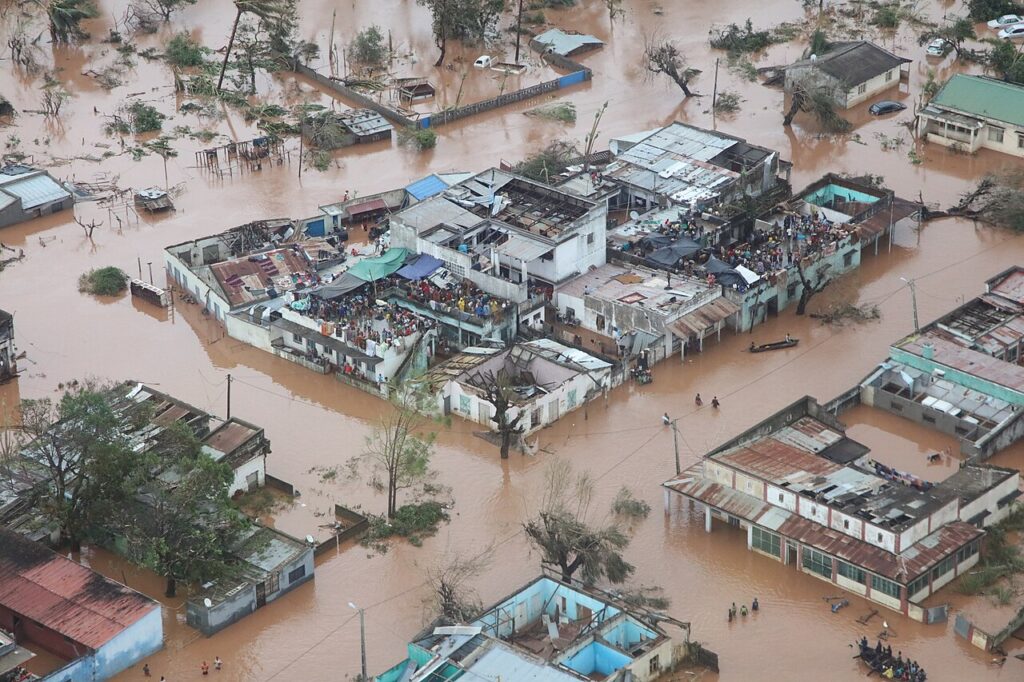
Read those numbers again, and think about what each request represents. A district where floods washed away the only bridge to the hospital. A coastline where saltwater has crept into wells and farmland. A pastoralist region where drought killed most of the herds. Each application is a community’s story compressed into a budget table.
The first projects
From 8 to 10 July 2026, the fund’s board met in Manila, at the headquarters of the Asian Development Bank. On the agenda were the first four proposals: from Haiti, Nigeria, Jamaica and Côte d’Ivoire, together worth about US$77.4 million.
These will be watched closely. They’re the first real test of whether the fund can move money quickly, fairly and to the people who need it, without drowning applicants in paperwork.
The gap
Reports describe a gap of around US$2.8 billion between what was requested and what was available, in this first round alone. The fund’s original goal to start disbursing by mid-2026 has slipped toward the end of the year. Campaigners warn that without new pledges, the fund could run short by 2027, and some are calling for at least US$50 billion a year for 2027–2031.
To put that in perspective, estimates of the loss and damage costs facing developing countries run into the hundreds of billions of dollars a year by 2030.
Why this should matter to you
You might be reading this from an office in Nairobi, a newsroom in Lagos or a foundation in London, wondering what a UN fund’s board meeting in Manila has to do with your work.
Here’s why. The FRLD was the hardest-won victory vulnerable countries have ever secured in climate negotiations. If it ends up as a symbolic fund that can only help one in ten applicants, trust in the entire multilateral climate system takes another blow. And trust is already in short supply after the US exit from the Paris Agreement and cuts to development budgets.
For communities facing floods and droughts, the delay isn’t abstract. It’s measured in homes not rebuilt, harvests not replanted and children not back in school.
How to tell this story
If you’re a journalist or communicator covering loss and damage, here’s my advice.
Lead with the ratio. “Ten times more requests than money” is a sentence anyone can understand.
Make one request human. Pick a single application or a single affected community and show what a US$10 million grant would mean there.
Follow the first projects. Haiti, Nigeria, Jamaica and Côte d’Ivoire will show whether the system works. Report on them in six months, and in a year.
Connect to COP31. Replenishment will be a pressure point in Antalya this November.
Avoid the charity frame. Loss and damage is about responsibility, not generosity.
I’ll keep following the fund. Start with my plain-language explainer on loss and damage, and explore my work on climate justice storytelling.
Frequently asked questions
How much money is in the Loss and Damage Fund’s first round?
About US$250 million is available in the initial round, with grants of US$5 million to US$20 million per project.
How many requests did the fund receive?
Requests reportedly totalled roughly US$2–3 billion, about ten times the available funding, with Africa submitting the largest share.
Cover photo: World Vision/DFID – UK Department for International Developm via Wikimedia Commons (CC BY 2.0)

Impact communications strategist and climate storyteller. Managing Director of Reznick Communications and Founder & CEO of WeAreTELL.