Picture a family cemetery on a low-lying coast. Grandparents were buried there a comfortable walk from the shore. Year by year, the sea creeps closer, until one high tide reaches the first graves.
Nobody can put a price on that. And yet, in the world of climate negotiations, someone has to decide who pays for it.
That’s the heart of loss and damage, a phrase that sounds bureaucratic and describes something profoundly human.
The three buckets of climate action
Climate action is usually divided into three parts.
Mitigation is about cutting emissions so the problem doesn’t get worse: solar instead of diesel, forests instead of farmland, electric buses instead of diesel matatus.
Adaptation is about preparing for impacts we can’t avoid: sea walls, drought-tolerant seed, early warning systems, cooler buildings.
Loss and damage is what’s left over. It’s the harm that happens anyway, because adaptation has limits, because it’s too expensive, or because it came too late.
Two kinds of loss
Loss and damage comes in two forms.
Economic losses can be counted in money. Houses destroyed by floods. Roads washed away. Crops failed. Livestock lost. Businesses ruined.
Non-economic losses can’t. Lives. Health. Culture. Ancestral land. Sacred sites. A way of life that depended on a glacier, a river or a season that no longer behaves the way it used to.
When a Pacific island community relocates because the sea has taken their land, they lose more than property. They lose the place where their identity lives.
Why it’s a justice issue
Here’s the uncomfortable truth at the centre of climate change.
The countries that have contributed least to the problem are often suffering the most. Africa as a whole accounts for a small share of historical global emissions, yet faces some of the harshest impacts on the planet. The same is true of many small island states.
For decades, vulnerable countries argued that this imbalance creates a responsibility. If your emissions helped flood my village, shouldn’t you help me rebuild?
Wealthier countries resisted for a long time. Their fear was liability: that accepting responsibility for loss and damage would open the door to endless legal claims.
The long road to a fund
The idea was first proposed by Vanuatu in the early 1990s, during the negotiations that created the UN climate convention. It took three decades of persistence to get anywhere.
In 2013, countries created the Warsaw International Mechanism on loss and damage, focused mostly on knowledge and coordination. In 2015, the Paris Agreement recognised loss and damage in its own article, Article 8, while stating that it doesn’t involve or provide a basis for liability or compensation.
Then, at COP27 in Sharm el-Sheikh in 2022, after relentless pressure from developing countries and civil society, countries agreed to create dedicated funding arrangements, including a new fund. It was later named the Fund for responding to Loss and Damage (FRLD), with the World Bank as interim host. At COP28, pledges began coming in.
The money gap
Here’s the problem. Pledges so far amount to hundreds of millions of dollars. Estimates of the loss and damage costs facing developing countries run into the hundreds of billions of dollars a year by the end of this decade.
When the fund opened its first call for proposals, it received roughly ten times more requests than it could fund. I wrote about that in detail in this piece on the fund’s first funding round.
How to talk about loss and damage
This is one of the hardest climate topics to communicate. Here’s what I’ve learned.
Use real places. “Loss and damage” is abstract. A specific flood, a specific drought, a specific community is not.
Don’t forget non-economic losses. Culture, graves, language and identity can’t be insured. They’re often the most powerful part of the story.
Avoid the charity frame. This isn’t about generosity. It’s about responsibility and fairness.
Explain the fund simply. What it is, how much it has, how much is needed and who decides.
Centre affected people as agents. Communities hit by climate disasters are not passive victims. They’re rebuilding, organising and advocating.
Why it matters now
Climate impacts are accelerating. The WMO confirmed that the years 2015–2025 were the eleven warmest on record. The limits of adaptation are being reached in more places, more often.
Loss and damage is no longer a future problem. It’s a present one. How the world responds will define whether climate action is seen as fair.
Loss and damage is central to climate justice and to my work as a climate storyteller and climate influencer. Read more climate justice articles.
Frequently asked questions
What is loss and damage?
Climate impacts that can’t be avoided or adapted to, including economic losses like homes and crops, and non-economic losses like lives, culture and heritage.
What is the FRLD?
The Fund for responding to Loss and Damage, agreed at COP27 in 2022, which supports developing countries hit by climate disasters.
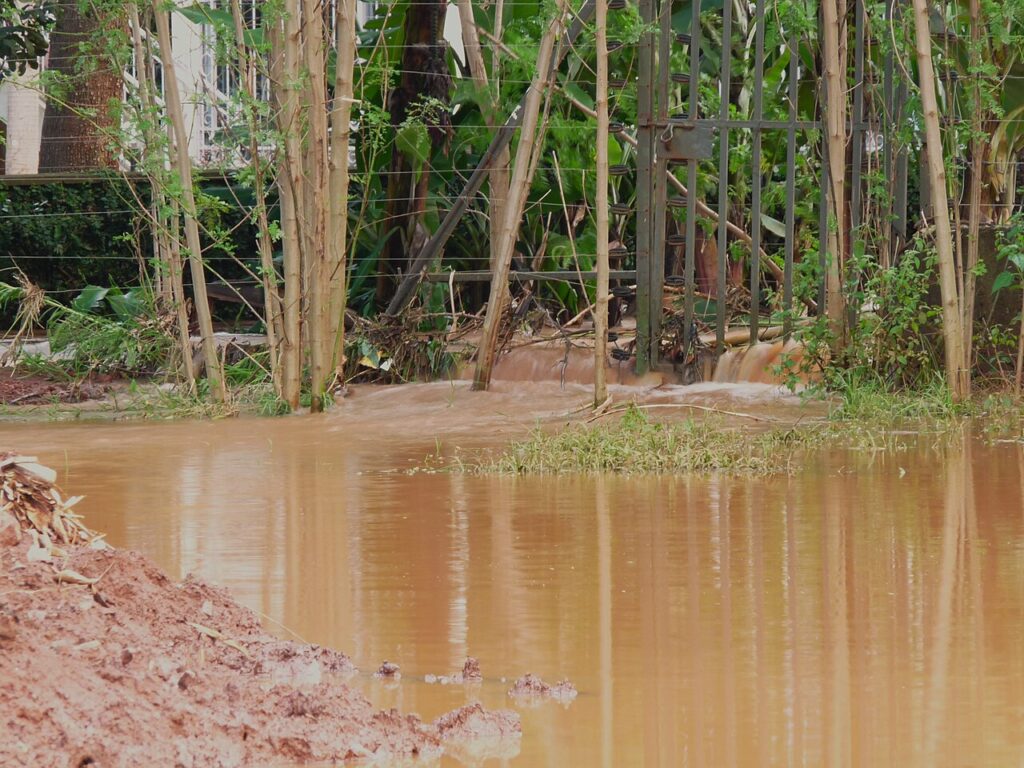
Cover photo: NoahNairobi via Wikimedia Commons (CC BY-SA 4.0)

Impact communications strategist and climate storyteller. Managing Director of Reznick Communications and Founder & CEO of WeAreTELL.