Somewhere in the middle of the Indian Ocean, hundreds of kilometres from any coastline, there’s water that belongs to no country.
Until this weekend, if you wanted to protect a seamount teeming with life out there, there was no comprehensive legal tool to do it. No global process to create a marine protected area. No common rules for assessing the environmental impact of new activities. No agreed way to share the benefits of the genetic resources found in its depths.
On 17 January 2026, that changed. The Agreement on Marine Biodiversity of Areas Beyond National Jurisdiction, better known as the High Seas Treaty or BBNJ, entered into force. Nearly half of the planet’s surface now falls under a legal framework designed to protect marine life.
It happened quietly. No fireworks, no summit photo. It may still be one of the most significant environmental agreements of our lifetimes.
How big are the high seas?
Each coastal country controls an “exclusive economic zone” extending up to 200 nautical miles from its coast. Beyond that lie the high seas: waters that belong to everyone and, until now, were protected by almost no one.
The high seas cover roughly two-thirds of the ocean and nearly half the Earth’s surface. They’re home to some of the planet’s least explored ecosystems: deep-sea corals, hydrothermal vents, seamounts, and the migration routes of whales, sharks, turtles and tuna.
Two decades to get here
Talks on protecting biodiversity in the high seas began at the UN in the early 2000s. For years they moved slowly, stuck on questions of money, access and sovereignty.
In March 2023, after a final marathon session in New York, negotiators finally agreed the text. The treaty opened for signature later that year. It needed 60 ratifications to enter into force. That threshold was crossed in September 2025, building on momentum from the UN Ocean Conference in Nice earlier that year. Under the treaty’s rules, it entered into force 120 days later: on 17 January 2026.
What the treaty does
Marine protected areas on the high seas. For the first time, there’s a global process to create protected areas in international waters. This is essential if the world is serious about protecting 30% of the ocean by 2030, the “30 by 30” target agreed under the Global Biodiversity Framework.
Environmental impact assessments. Activities that could significantly harm high seas ecosystems will need to be assessed first.
Benefit-sharing from marine genetic resources. Scientists and companies are discovering compounds in deep-sea organisms with potential uses in medicine and industry. The treaty sets rules so that the benefits are shared, including with developing countries that have historically been shut out.
Capacity building and technology transfer. Developing countries get support to participate in ocean science and governance, not just watch from the sidelines.
What happens next
Entry into force is the starting gun, not the finish line.
- Countries that have ratified will convene the treaty’s first Conference of the Parties, typically within a year, to set rules, institutions and budgets.
- Proposals for the first high seas marine protected areas can begin moving.
- Pressure will grow on major ocean-using countries that haven’t ratified to join.
Why it matters on the Kenyan coast
You might think the high seas are too far away to matter to Kenya. They’re not.
The ocean doesn’t respect borders. A green turtle hatched on a beach in Watamu may spend years crossing international waters before returning to nest. Tuna that sustain fisheries across the western Indian Ocean migrate through the high seas. Whales pass along the Kenyan coast on journeys that span ocean basins.
Protecting the high seas helps protect the fish, turtles and whales that coastal communities depend on, for food, income and tourism. And the treaty’s capacity-building provisions could open doors for Kenyan and African marine scientists, if African countries engage actively.
How to tell this story
The high seas are hard to communicate. No one lives there. Most people will never see them. Here’s what works:
Use the frontier frame. “One of the last places on Earth without rules” is a powerful hook.
Follow an animal. A turtle, a whale or a tuna crossing borders makes the high seas tangible.
Connect to dinner. Fish caught in international waters end up on plates around the world.
Be clear about what’s next. Celebrate, but explain that implementation, funding and enforcement are the next battles.
The ocean has waited a long time for a rulebook. Now the work of using it begins.
Read about the moment the treaty crossed 60 ratifications, explore more ocean and climate articles, or book me to moderate your ocean or blue economy event.
Frequently asked questions
When did the High Seas Treaty become law?
It entered into force on 17 January 2026, 120 days after reaching its 60th ratification.
What happens after the High Seas Treaty enters into force?
Countries convene the first Conference of the Parties to set rules and institutions, and proposals for high seas marine protected areas can move forward.
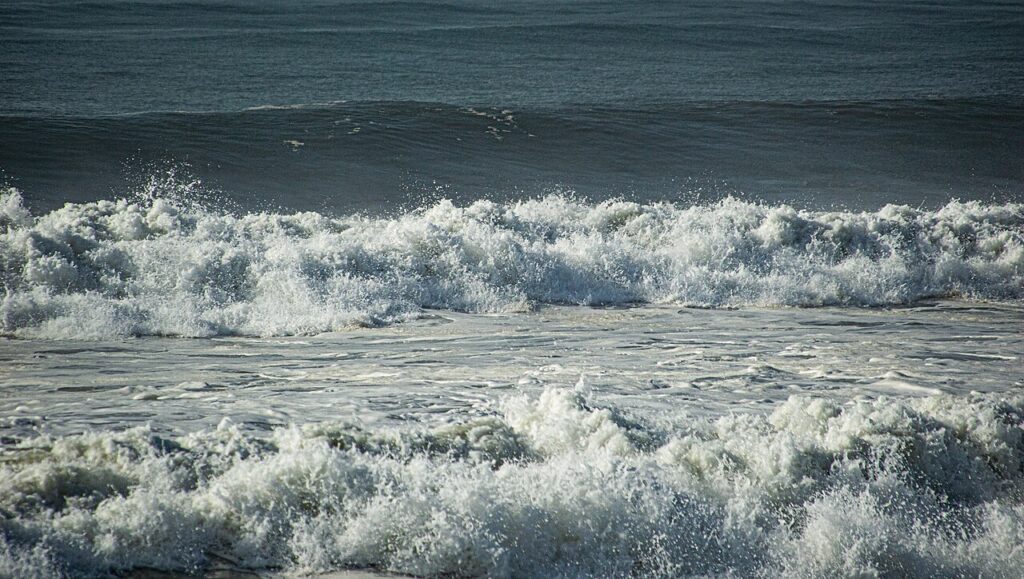
Cover photo: Michael Gaylard from Horsham, UK via Wikimedia Commons (CC BY 2.0)

Impact communications strategist and climate storyteller. Managing Director of Reznick Communications and Founder & CEO of WeAreTELL.