Every year, just before the UN climate summit, the UN Environment Programme publishes a report that works like a school report card for the planet.
It’s called the Emissions Gap Report, and it asks a simple question: if every country does what it has promised, where does that leave us?
This year’s edition, published days before COP30 in Belém, has a blunt title: Off Target.
The gap, explained
Imagine you’re driving to Mombasa and you need to arrive by 6pm. Your current speed will get you there at 9pm. The difference between where you’ll be and where you need to be is your “gap”.
The Emissions Gap Report measures the difference between:
- Where global emissions are heading under countries’ current pledges and policies, and
- Where they need to be to limit warming to 1.5°C or well below 2°C, the goals of the Paris Agreement.
That gap is measured in billions of tonnes of greenhouse gases. And it’s big.
The headline numbers
According to the 2025 report:
- If countries fully implement their current pledges, the world is heading for roughly 2.3 to 2.5°C of warming this century.
- Under current policies, meaning what governments are actually doing rather than promising, the projection is higher, around 2.8°C.
Both are far above the 1.5°C limit that scientists associate with avoiding the worst impacts.
The part nobody tells you: progress
Here’s something that often gets lost in the headlines. Before the Paris Agreement was adopted in 2015, projections pointed to warming of around 4°C by the end of the century.
Today, they point to between roughly 2.3 and 2.8°C.
That’s still dangerous. But it’s also evidence that climate policy, clean technology and international cooperation have bent the curve. Solar and wind got cheap. Electric vehicles took off. Countries passed climate laws. Action has worked, just not enough, and not fast enough.
That matters for how we communicate. “Nothing has worked” is false, and it breeds despair. “Action has worked, and we need much more of it” is true, and it breeds resolve.
Why this year’s report matters especially
Countries are submitting a new round of national climate plans, or NDCs, covering the period to 2035. This is one of the last real opportunities to bend the curve further this decade.
The Emissions Gap Report is effectively a verdict on whether those plans add up. So far, collectively, they don’t.
What would close the gap?
The solutions aren’t mysterious. They include:
- Rapid expansion of renewable energy.
- Energy efficiency in buildings, transport and industry.
- Cutting methane, a powerful short-lived greenhouse gas, from oil and gas, agriculture and waste.
- Halting deforestation.
- Electrifying transport and cooking.
Many of these also bring benefits beyond climate: cleaner air, lower energy bills, better health and new jobs.
How to talk about the report
Acknowledge progress honestly. Projections have come down significantly since Paris. Say so.
Make every fraction of a degree count. 2.3°C is much better than 3°C. Every tenth of a degree avoided means fewer lives disrupted, fewer crops failed, fewer homes flooded.
Point to solutions at scale. Show that the tools exist.
Localise. What would 2.5°C mean for Kenya’s farmers, water supplies and coastal towns?
Avoid “too late”. It isn’t too late to limit damage. It’s never too late to reduce harm.
For organisers
If you’re hosting a pre-COP briefing, the Emissions Gap Report is the perfect anchor. A good moderator can help scientists and policymakers translate it for media, decision-makers and the public.
Read more about my approach to climate communication, and follow my COP30 coverage.
Frequently asked questions
What is the emissions gap?
It’s the difference between where global emissions are heading under current pledges and policies, and where they need to be to limit warming to 1.5°C or well below 2°C.
What warming does the 2025 Emissions Gap Report project?
Roughly 2.3–2.5°C this century if current pledges are fully implemented, and around 2.8°C under current policies.
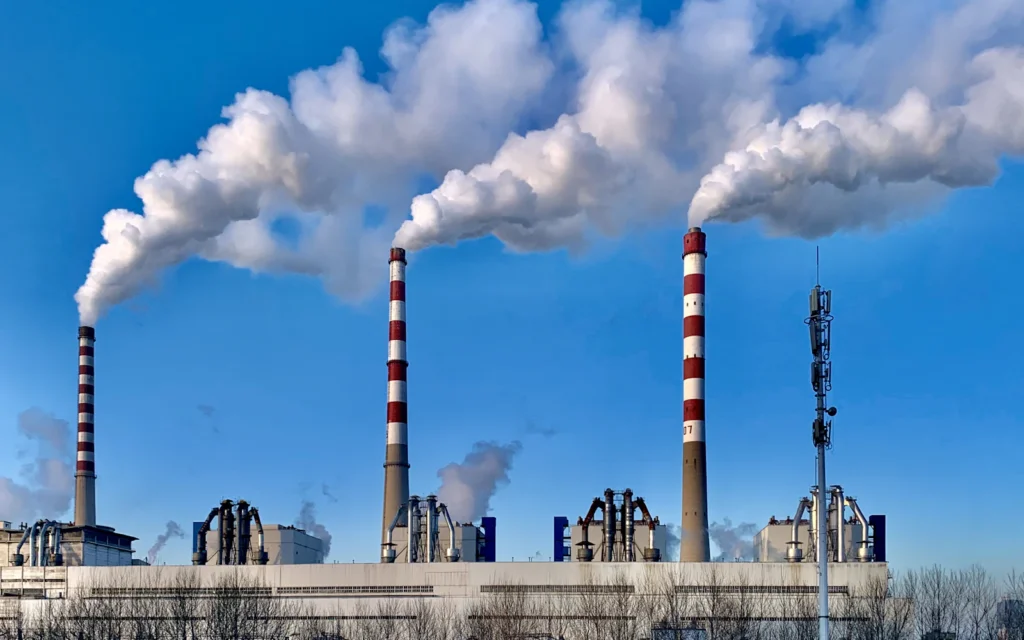
Cover photo: Andreas Felske on Unsplash

Impact communications strategist and climate storyteller. Managing Director of Reznick Communications and Founder & CEO of WeAreTELL.