Walk through a Nairobi market today and you’ll notice something that would have seemed impossible a decade ago. Hardly anyone is carrying a flimsy plastic carrier bag.
Instead: woven sisal baskets, non-woven fabric bags, kiondos, reusable totes in every colour. It’s so normal now that young Kenyans might not remember how different the streets looked before.
In 2017, Kenya introduced one of the world’s toughest bans on single-use plastic carrier bags, with heavy penalties for manufacturing, selling or using them. In 2020, it banned single-use plastics in protected areas: national parks, beaches, forests and conservation areas.
The policies weren’t perfect. Enforcement was uneven, and some bags still slipped across borders. But they changed behaviour visibly and quickly. It’s one of Africa’s great environmental policy stories, and it deserves to be told today.
Today: World Environment Day
Today, 5 June 2025, is World Environment Day. The Republic of Korea is hosting this year’s global celebration, and the theme is ending plastic pollution, under the banner #BeatPlasticPollution.
The timing is pointed. In August, governments will resume negotiations on a global plastics treaty in Geneva, after talks in Busan, South Korea, ended without agreement in late 2024.
Why plastic is the most “visible” environmental issue
Plastic is unusual among environmental problems because you can see it and touch it. You can’t see carbon dioxide. You can see a plastic bottle floating in the Nairobi River, a bag caught in an acacia tree, a turtle tangled in fishing line.
That visibility is a gift for communicators. Plastic moves people emotionally in a way few other issues do.
It’s also a trap.
The trap: making it a litter problem
When plastic is shown mainly as litter, the solution looks like better behaviour and more clean-ups. Pick up the bottles. Recycle more. Don’t litter.
Those actions matter. But they hide the real story.
Most plastic ever produced has never been recycled. Production keeps growing. Plastic is made from fossil fuels, and as the world moves away from oil and gas for energy, petrochemical producers are betting heavily on plastics as a source of future demand.
Plastic pollution isn’t fundamentally a litter problem. It’s a production problem. And that makes it a story about power: who decides how much plastic the world makes, and who deals with the consequences.
Africa’s position
Africa produces relatively little plastic but receives a growing flood of it, through imported goods, packaging and the global waste trade. African cities struggle with plastic-clogged drains that worsen urban flooding. Open burning of waste harms people’s lungs. Fishing communities pull plastic from their nets.
That’s why many African countries are pushing for an ambitious treaty that addresses production, not just waste.
How to tell plastic stories that go upstream
Celebrate clean-ups, but connect them to the bigger picture. A beach clean-up is a great hook for a story about production and policy.
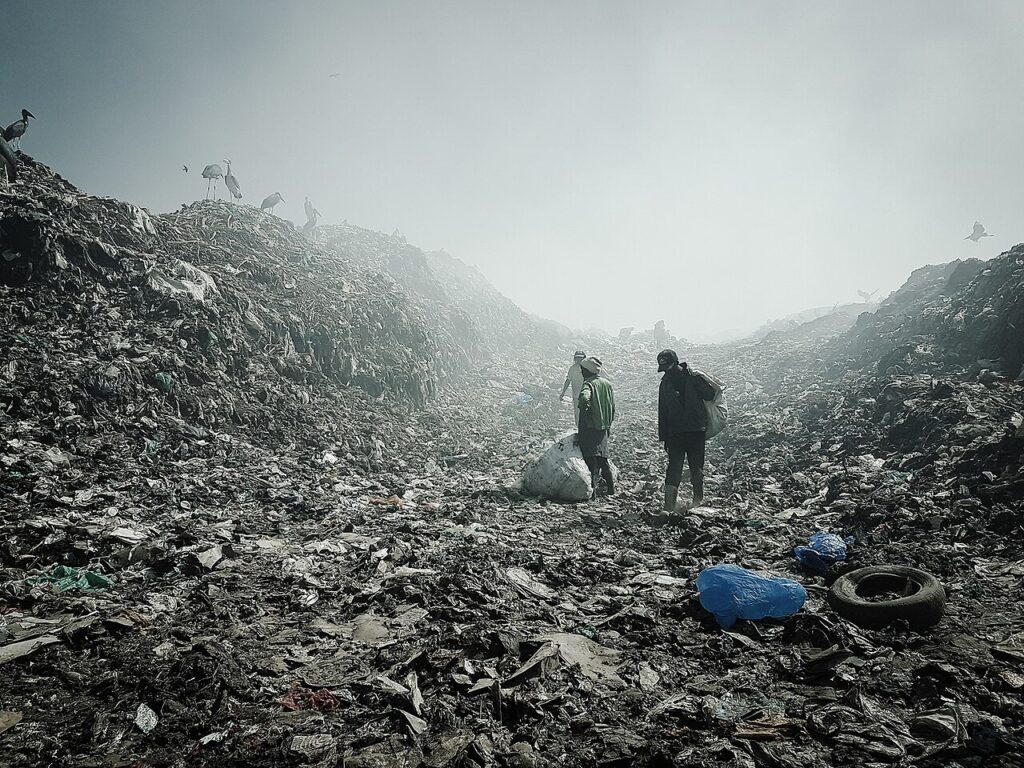
Feature waste pickers. Informal waste workers recover a large share of recyclable material in many African cities, often in dangerous conditions and for very little pay. They’re experts in the waste system, not props for photographs.
Connect plastic to health and climate. Plastic is made from fossil fuels. Burning it harms lungs. These links widen your audience beyond environmentalists.
Offer real actions. Refill and reuse systems, supporting strong policy and backing ambitious treaty positions are more powerful calls to action than “recycle more”.
Show what works. Kenya’s bans. Refill shops. Deposit return schemes. Businesses designing out packaging.
Make today count
If you’re organising an event today, invite a local voice: a fisherwoman from Lamu, a recycler from Dandora, a young innovator turning plastic waste into building materials. Let them hold the microphone.
I’ll be watching the Geneva negotiations closely and writing about what they mean for Africa. Follow along on the articles page, and if you need a moderator for your environment event, I’m always glad to help.
Frequently asked questions
Who hosted World Environment Day 2025?
The Republic of Korea hosted World Environment Day 2025, with a focus on ending plastic pollution under the banner #BeatPlasticPollution.
When did Kenya ban plastic bags?
Kenya banned single-use plastic carrier bags in 2017 and single-use plastics in protected areas such as parks, forests and beaches in 2020.
Cover photo: Falkue via Wikimedia Commons (CC BY-SA 4.0)

Impact communications strategist and climate storyteller. Managing Director of Reznick Communications and Founder & CEO of WeAreTELL.