In 1977, a Kenyan biologist named Wangari Maathai started something deceptively simple. She encouraged rural women to plant trees.
The women had noticed what the experts in Nairobi offices were slower to see: streams were drying up, firewood was harder to find, soil was washing away, food was getting scarcer. Planting trees addressed all of it at once. Over the following decades, the Green Belt Movement she founded helped communities plant tens of millions of trees across Kenya. In 2004, she became the first African woman to win the Nobel Peace Prize.
Nearly fifty years later, Maathai’s insight still holds. Women are often the first to feel the effects of a changing environment, and among the most effective at responding to it.
Why climate change isn’t gender-neutral
In many rural communities across Africa, women carry primary responsibility for collecting water and fuel, growing food and caring for families. When the climate shifts, those tasks get harder first.
When rivers dry up, women walk further for water. When forests shrink, they walk further for firewood. When harvests fail, they often eat last. Girls may be pulled out of school to help.
At the same time, women farmers frequently have less secure land rights, less access to credit, fewer extension services and less access to weather information than men. That makes adapting harder.
UN agencies have long highlighted that, in many contexts, women and girls face greater risks during climate-related disasters, because of social norms, unequal access to information and economic inequality.
But that’s only half the story
If you only tell the story of women as climate victims, you miss everything that makes it powerful. Across the continent, women are leading.
Seed savers. In community seed banks, women preserve and exchange seed varieties adapted to local conditions, including drought-tolerant crops that formal seed systems sometimes overlook.
Restoration leaders. Following in Maathai’s footsteps, women’s groups lead tree planting, land restoration and agroforestry across Kenya and beyond.
Clean energy entrepreneurs. Women run solar distribution networks, clean cookstove businesses and pay-as-you-go energy agent networks, often reaching households that bigger companies miss.
Scientists and negotiators. African women lead climate research, sit at COP negotiating tables and run climate organisations.
Community organisers. From water committees to disaster preparedness groups, women hold communities together when the climate turns hostile.
How to tell women’s climate stories well
Show leadership, not just vulnerability. A woman farmer facing drought is also an expert in her land, her seeds and her community.
Name them. Full names and titles, with consent. “A local woman” erases her.
Let them speak. Direct quotes, in their own framing and, where possible, their own language.
Name the barriers honestly. Land rights, finance gaps and access to information are structural problems, not personal failings.
Avoid tokenism. One woman on an all-male panel isn’t representation. One “women’s story” in an annual report isn’t a gender strategy.
For event organisers
Gender balance on stage isn’t a box to tick. It changes the conversation. Invite women experts to speak on finance, technology and policy, not just on “gender sessions”. Choose moderators who actively bring every voice in. And look at your speaker list before you print it.
A personal note
Through WeAreTELL and my moderation work, I’m proud to amplify so many incredible women, and I keep learning from them. The climate movement in Africa would be unrecognisable without them.
On International Women’s Day, let’s do more than celebrate. Let’s fund, platform, credit and follow.
Read more about my work, or invite me to speak or moderate at your event.
Frequently asked questions
Why does climate change affect women differently?
In many communities women carry responsibility for water, fuel and food, and often have less access to land rights, credit and information, so climate shocks hit their workload and livelihoods harder.
How can events improve gender representation?
Commit to balanced panels, invite women experts to main stages, not just gender sessions, and choose moderators who actively bring every voice in.
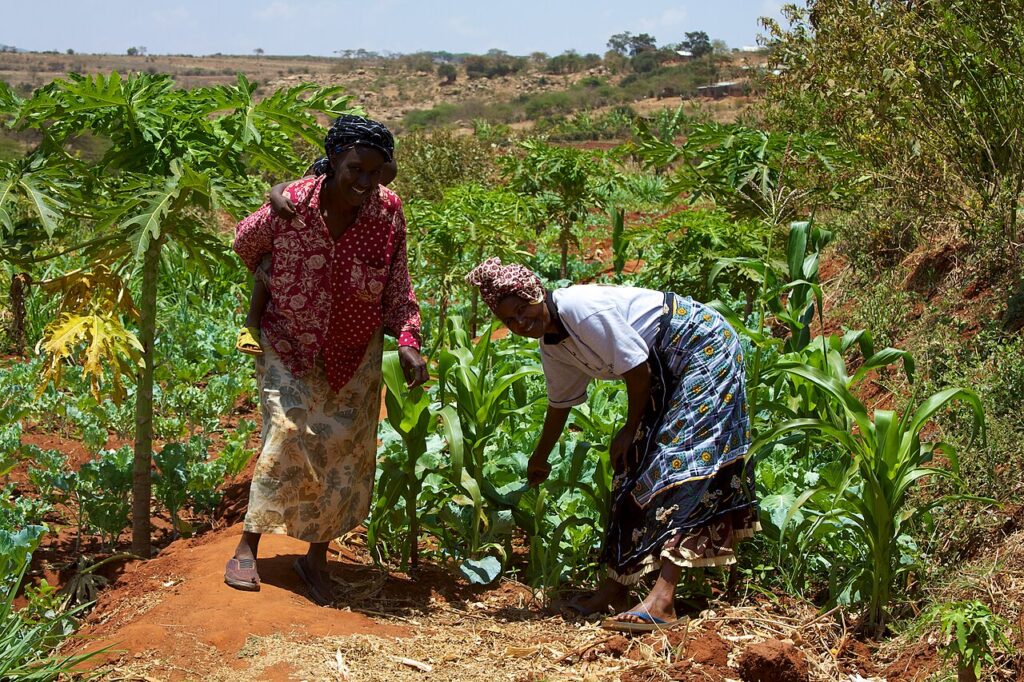
Cover photo: McKay Savage from London, UK via Wikimedia Commons (CC BY 2.0)

Impact communications strategist and climate storyteller. Managing Director of Reznick Communications and Founder & CEO of WeAreTELL.