Picture a side event at a big climate conference.
It’s 4:15pm on a Tuesday. The room holds eighty chairs. Twenty-two are filled, mostly by colleagues of the speakers. The panel runs twenty minutes late because the opening remarks ran long. Five speakers each read a prepared statement. There’s time for one audience question. It’s a speech.
Afterwards, the organisers post a photo cropped to make the room look full.
If you’ve been to a COP or a climate week, you’ve seen this. Maybe you’ve organised it. I’ve moderated enough side events to know the difference between the ones that fizzle and the ones people talk about for days. It’s rarely the budget. It’s the design.
Why most side events fail
They fail because they’re designed around the organiser, not the audience.
The thinking goes: we have a programme, we have partners, we need visibility, so let’s do a panel. Five logos, five speakers, five statements. The audience, an exhausted delegate choosing between twelve events in the same hour, has no reason to pick yours.
1. Lead with a question that has stakes
The title is your entire marketing campaign. Compare:
- “Climate Finance in Africa: Opportunities and Challenges”
- “Why Does a Solar Company in Nairobi Pay Three Times More for Capital Than One in Berlin?”
The first could be any event in any year. The second makes people stop. It promises tension, specificity and an answer.
2. Go smaller than you think
Big rooms are hard to fill and harder to energise. A focused roundtable of thirty decision-makers who actually talk to each other often produces more than a ballroom of three hundred passive listeners.
If your goal is influence, small and targeted beats big and empty.
3. Kill the statements
Ask speakers not to prepare statements. Instead, give each one a three-minute provocation: one idea, one piece of evidence, one challenge to the room. Then open it up.
The most memorable side events I’ve moderated felt like conversations, with speakers responding to each other and the audience pushing back.
4. Build the panel for friction, not comfort
Five people who agree is not a panel. It’s a choir.
Mix perspectives: a negotiator and a community leader, an investor and an activist, a minister and a young entrepreneur. Make sure the stage reflects the people affected by the issue, not just the people funding the event. Avoid all-male or all-Global-North lineups. Audiences notice.
5. Check the main programme before you pick a time
Never schedule against the headline plenary, a high-profile ministerial or the time when your target audience is in negotiations. Look at the official programme, talk to delegations and choose a slot when your people are free.
6. Invite people, don’t broadcast
Mass emails get ignored. Personal invitations get answered. Have each speaker and partner personally invite ten people they know would value the session. That alone can fill a room.
7. Invest in the moderator
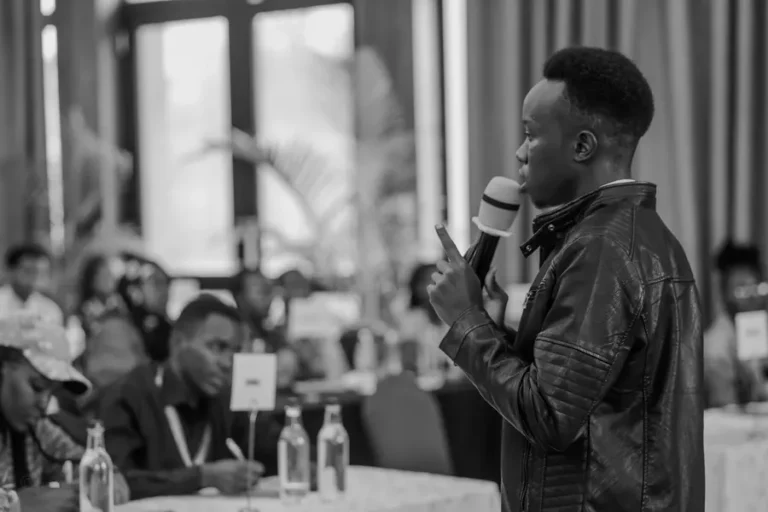
I’m biased, but this is where many events fall apart. A good moderator does far more than read bios:
- Shapes the session design with you beforehand.
- Keeps every speaker to time, graciously.
- Asks the follow-up question everyone was thinking.
- Brings the audience in early.
- Draws out the insight and names it clearly at the end.
8. Make it accessible
Livestream it. Caption it. Record it. Share slides in advance. Many people who care about your issue couldn’t afford to travel. Give them a way in.
9. Leave something behind
What will exist after your event that didn’t exist before? A summary note, a joint statement, a set of recommendations, a follow-up meeting, a coalition. Announce it at the start, so people know the session has a purpose.
10. Follow up within a week
Send participants a summary, the recording and clear next steps. Most organisers don’t. The ones who do turn a one-hour event into a relationship.
The test
Before you finalise your side event, ask one question: if I weren’t organising this, would I choose it over the eleven other events at the same time?
If the honest answer is no, redesign it.
I moderate side events, dialogues and roundtables at climate weeks, summits and COPs. If you’re planning one, I’d love to help you design something people remember. See my moderating work or send an enquiry.
Frequently asked questions
How do I get people to attend my side event?
Start with a sharp question, keep it focused, avoid clashes with major sessions, send personal invitations and partner with organisations that bring their networks.
What format works best for side events?
Short provocations followed by real dialogue, with a strong moderator and a concrete output such as a summary or joint statement.
Cover photo: Elijah Ekdahl on Unsplash

Impact communications strategist and climate storyteller. Managing Director of Reznick Communications and Founder & CEO of WeAreTELL.