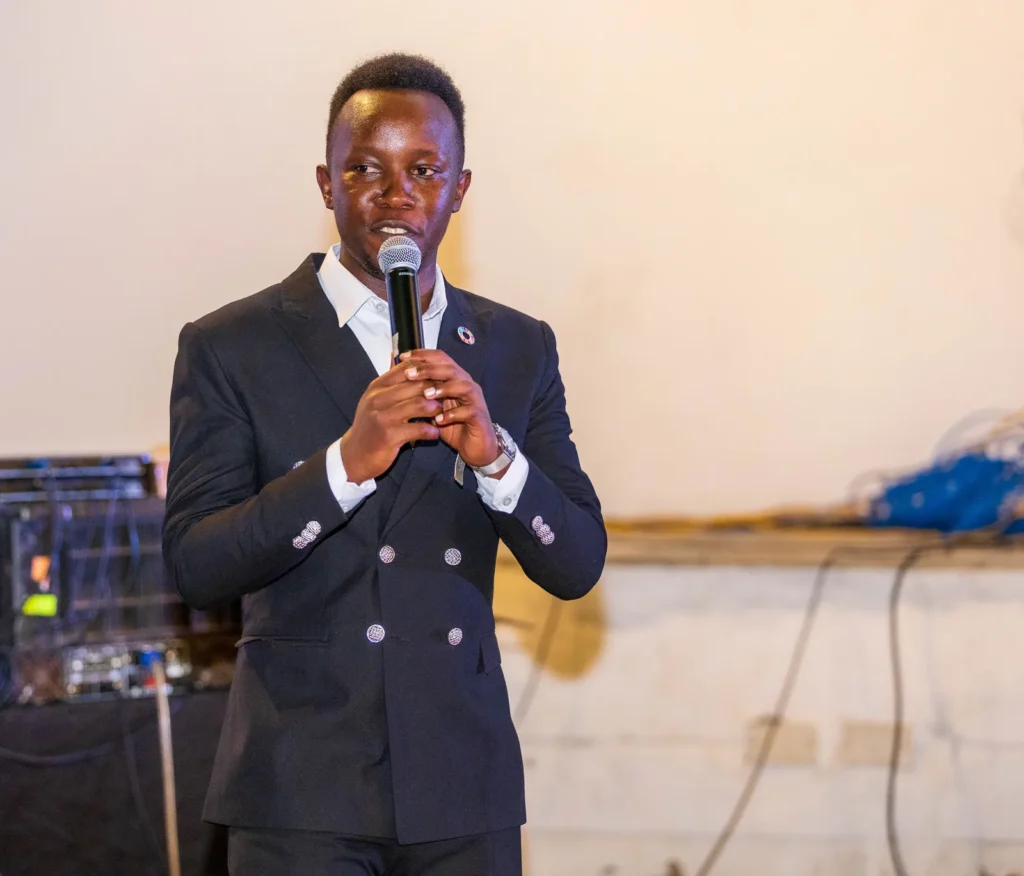
Some briefs are this short:
“Panel on climate. 3pm. Thanks!”
Others go the opposite way: a 40-page document with the organisation’s full history, three strategy papers and a list of sponsors in font size 8, but no speaker names and no timings.
Neither works. And when a brief doesn’t work, it’s not the MC who suffers most. It’s the event.
Here’s what a great brief looks like, from the side of the stage.
When to send what
Timing matters almost as much as content.
Two to three weeks before: the core brief. Purpose, audience, programme, speakers.
One week before: final speaker list, run of show and any changes.
48 hours before: last-minute updates, pronunciation notes, VIP arrival times, final scripts.
Then, ideally, a briefing call somewhere in the middle.
The eight things every brief needs
1. The purpose, in two sentences
What should the audience think, feel or do differently when they leave? This is the single most useful thing you can tell your host. It shapes the tone of every introduction, every transition and every question.
2. Who’s in the room
Ministers or students? Investors or community members? Five hundred people or fifty? Online viewers? What do they already know about the topic? What languages do they speak?
3. The run of show
A minute-by-minute timeline, including transitions, breaks, video playbacks, performances, housekeeping announcements and photo moments. (I’ve written a separate guide to building a run of show.)
4. Speaker information
For each speaker:
- Full name, correct title and pronunciation (a voice note is gold).
- A short bio, not the five-page CV.
- What you want them to cover, or the angle of their talk.
- Anything sensitive: tensions between speakers, topics to avoid, recent controversies.
5. Protocol
At events with dignitaries, the order of recognition matters enormously. Send the protocol list with correct honorifics and confirm who speaks when. Getting this wrong can cause real offence.
6. Key messages and partners
What absolutely must be said? Which partners and sponsors must be acknowledged, and how? Is there a call to action at the end?
7. Logistics
- Stage layout and where speakers enter and exit.
- Microphones: handheld, lapel, lectern.
- Confidence monitors and timing cards.
- Clickers and slide control.
- Interpretation arrangements.
- The name and number of the technical lead.
8. Contingencies
What if the keynote cancels? What if the minister is late? What if the livestream drops? Agree a plan B together before the day.
The briefing call
Send the document, then talk. A 30-minute call with the organiser, and ideally a short call with each panellist, catches what documents miss: the politics, the personalities, the thing everyone knows but nobody wrote down.
Some of the best sessions are shaped on those calls, when a panellist mentions a story or a disagreement that becomes the heart of the conversation.
Treat your host as a partner
The single biggest improvement most organisers can make is to bring their MC or moderator in early, not as a voice to read a script, but as a partner in designing the experience.
A good host has seen hundreds of events. They know what drags, what lands, where audiences lose energy and how to rescue a session that’s going sideways. Use that experience.
Steal this checklist
- [ ] Purpose (2 sentences)
- [ ] Audience profile
- [ ] Run of show
- [ ] Speaker bios, titles and pronunciations
- [ ] Protocol list
- [ ] Key messages and partner acknowledgements
- [ ] Logistics and technical contacts
- [ ] Contingency plans
- [ ] Briefing call booked
Need an MC or moderator who’ll use every line of that brief? See my speaking work and send an enquiry.
Frequently asked questions
What should an MC brief include?
Event purpose, audience profile, run of show, speaker bios and pronunciations, protocol order, key messages and sponsors, logistics and contingency plans.
When should I brief my MC?
Send the core brief two to three weeks before, final details a week before, and last-minute changes 48 hours before, with a briefing call in between.
Cover photo: Blair Reznick / WeAreTELL archive

Impact communications strategist and climate storyteller. Managing Director of Reznick Communications and Founder & CEO of WeAreTELL.