There’s a kind of climate post that goes viral every few months. A terrifying graph. A headline about tipping points. A caption that says something like “We have run out of time.”
Thousands of people share it. And then, for most of them, nothing happens. They feel worse. They scroll on. Some quietly decide that if it’s too late anyway, there’s no point trying.
That isn’t apathy. It’s a very human response to a message that offers fear without a way out.
What the research says
Climate communication researchers have studied this for years. The pattern is consistent: fear can grab attention, but fear without efficacy, without a sense that action is possible and will make a difference, tends to lead to avoidance, denial or paralysis.
When people feel threatened and helpless at the same time, they protect themselves emotionally. They change the channel. They argue with the messenger. They decide it’s someone else’s problem.
When people feel the threat and believe they can do something about it, they’re far more likely to act.
That’s the space where hope lives.
Hope is not optimism
Let me be clear about what I’m not saying. I’m not saying “everything will be fine”. It won’t, unless we act. I’m not saying hide the bad news. The science is serious, and it should be stated plainly.
Constructive hope is different. It’s grounded in evidence and attached to action. It says: this is serious, here’s what’s already working, and here’s how you can help it grow.
Optimism is a feeling. Hope is a decision to act as if action matters, because it does.
The formula I use: Problem, Solution, Action
Problem: state the challenge honestly. Don’t exaggerate. Don’t minimise.
Solution: show something that works, ideally with evidence and a human face.
Action: invite the audience to do something specific.
Here’s an example:
“Droughts are coming more often in northern Kenya (problem). In parts of Isiolo, community-managed water pans are helping keep livestock alive through the dry months (solution). Ask your county to fund community-led water projects in next year’s budget (action).”
Three sentences. Honest, hopeful and actionable.
Real reasons for hope
Constructive hope needs real evidence. Fortunately, there’s plenty.
- Clean energy is scaling fast. Renewable power capacity has grown rapidly worldwide over the last decade, and costs for solar have fallen dramatically.
- Kenya generates most of its electricity from renewables, especially geothermal from the Rift Valley and hydropower, with growing wind and solar.
- Institutions can still move. In 2025, the International Court of Justice delivered a landmark advisory opinion on states’ climate obligations. In January 2026, the High Seas Treaty entered into force.
- Communities are restoring land. Across Africa, farmers and communities are bringing degraded land back to life.
- Projections have improved. UNEP’s Emissions Gap Report shows expected warming is lower than it looked before the Paris Agreement. Still far too high, but evidence that action works.
What about grief?
Hope doesn’t mean pretending loss isn’t happening. Grief is a valid and important part of climate communication, especially for communities losing homes, livelihoods and places they love.
The goal is to hold grief and hope together: to let people feel the stakes and their own power. Some of the most moving climate stories I know do exactly that.
Avoid toxic positivity
The opposite mistake is just as damaging: relentless cheerfulness that ignores real harm. Audiences can smell it. It makes them distrust everything else you say.
Try this with your team
Take your organisation’s last campaign message. Does it include a problem, a solution and a specific action? If it only has a problem, it’s a warning. If it only has a solution, it’s an advert. If it has all three, it’s a call to act.
Rewrite it with the formula and test both versions with a small audience. You’ll see the difference.
I will go much deeper on this approach through ImpactComms. Read more about my approach as a climate storyteller.
Frequently asked questions
Does fear-based climate messaging work?
Fear can grab attention, but without a sense that action is possible it often leads to avoidance or paralysis. Pairing concern with solutions and clear actions tends to motivate more.
What is a simple formula for hopeful climate messages?
Problem, solution, action: state the challenge honestly, show something that works, and invite a specific step.
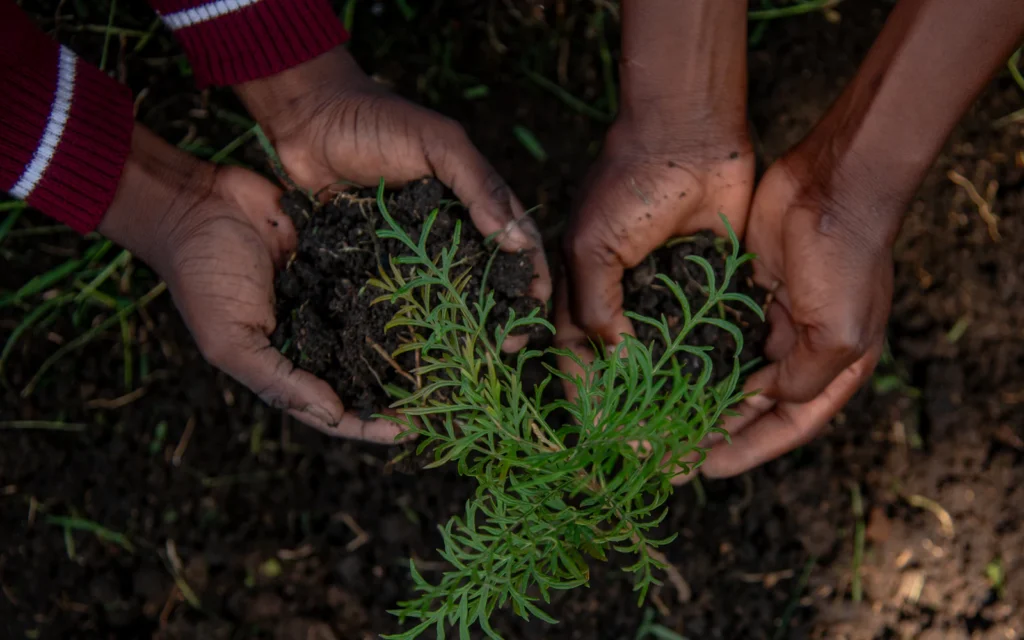
Cover photo: Hammilton Ojijo on Unsplash

Impact communications strategist and climate storyteller. Managing Director of Reznick Communications and Founder & CEO of WeAreTELL.