Open the drawer nearest to you. The one with the spare keys, the takeaway menus and the tangle of cables.
Chances are there’s an old phone in there. Maybe two. A charger for a device you no longer own. Earphones that only work on one side. Perhaps a dead laptop in a cupboard somewhere.
Now multiply that drawer by billions of households around the world.
According to the Global E-waste Monitor 2024, the world generated 62 million tonnes of electronic waste in 2022. Only about 22% of it was documented as properly collected and recycled. The rest was dumped, burned, stored in drawers or handled informally.
It’s one of the fastest-growing waste streams on the planet. And it’s a climate story most people never connect.
Why e-waste is a climate story
Electronics are packed with valuable materials: copper, gold, silver, cobalt, rare earths. Extracting those materials from the ground takes enormous amounts of energy and water, and causes significant environmental damage.
When we throw devices away instead of recovering what’s inside, we force the world to mine more. That means more emissions, more land disturbed and more pressure on communities living near mines.
Meanwhile, informal recycling often involves burning cables to recover copper, which releases toxic fumes and greenhouse gases into the air.
Recover the materials properly, and you reduce mining, cut emissions and keep toxins out of the environment. It’s one of the clearest examples of the circular economy in action.
Why it’s a health and justice story
Much of the world’s e-waste ends up in lower-income countries, where it’s dismantled by informal workers, often young people, with little or no protection. They’re exposed to lead, mercury, cadmium and other toxins that can cause serious harm to the brain, kidneys and lungs. Children living near dumpsites are especially vulnerable.
The people who benefit from cheap electronics are rarely the people breathing the smoke when those electronics die.
Why it’s an opportunity story
Here’s where the story turns hopeful.
Done right, e-waste management creates green jobs: collectors, refurbishers, repair technicians, dismantlers and recyclers. It recovers valuable materials that can re-enter supply chains. It keeps toxins out of soil and water.
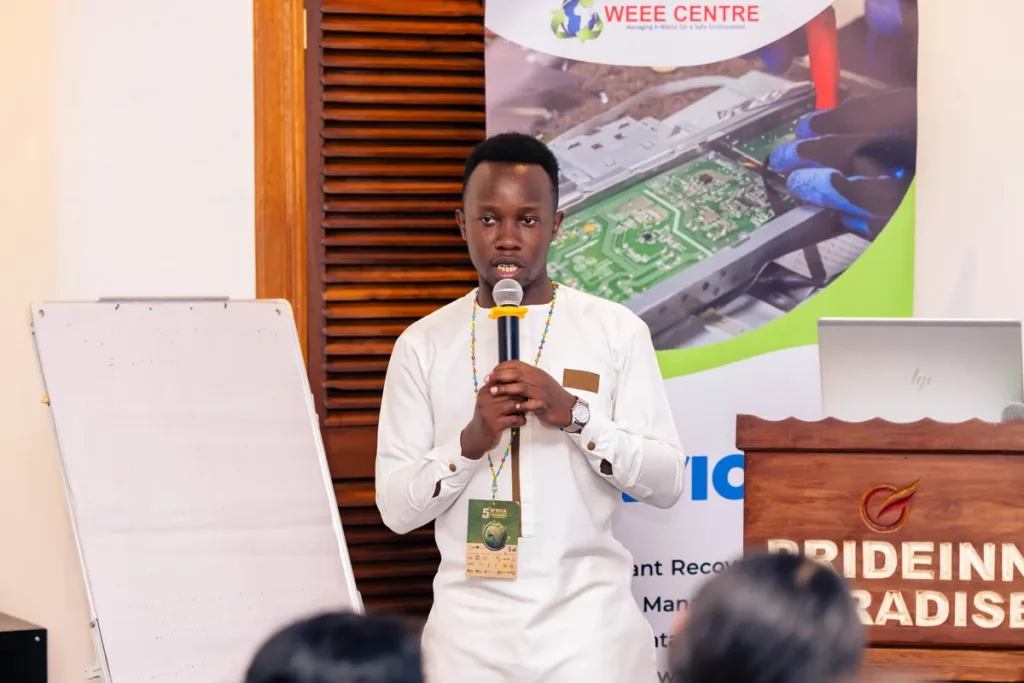
In Kenya, organisations like the WEEE Centre have shown how collection, refurbishment and safe recycling can work in an African context. I’ve had the privilege of moderating conversations on e-waste and the circular economy, and the energy in those rooms, from entrepreneurs, regulators, recyclers and young innovators, is remarkable.
The repair revolution
One of the most underrated climate actions is simply making things last longer. Kenya’s informal repair economy, from the phone repair stalls on Moi Avenue to the electronics technicians in every town, extends the life of millions of devices. Supporting and professionalising repair is circular economy policy, even if nobody calls it that.
How to communicate e-waste
Make it personal. Start with the drawer. Everyone has one.
Make the journey visible. Follow a phone from the factory to your hand to the drawer to the dumpsite, or to a recycling plant.
Offer one easy action. Where can people drop off old devices safely in their town? Make it simple.
Celebrate the workers. Repair technicians, collectors and recyclers are the heroes of the circular economy, not footnotes.
Connect to the bigger picture. Critical minerals, mining, climate and jobs.
International E-Waste Day
International E-Waste Day falls on 14 October every year. It’s a perfect hook for school programmes, corporate take-back drives, community collection days and campaigns.
If your organisation works on circular economy or e-waste and wants to reach more people, let’s talk. Read more about my impact communications work and the hidden minerals story behind Africa’s energy transition.
Frequently asked questions
How much e-waste does the world produce?
According to the Global E-waste Monitor 2024, the world generated 62 million tonnes of e-waste in 2022, and only about 22% was documented as formally collected and recycled.
When is International E-Waste Day?
International E-Waste Day is marked on 14 October each year.
Cover photo: Blair Reznick / WeAreTELL archive

Impact communications strategist and climate storyteller. Managing Director of Reznick Communications and Founder & CEO of WeAreTELL.