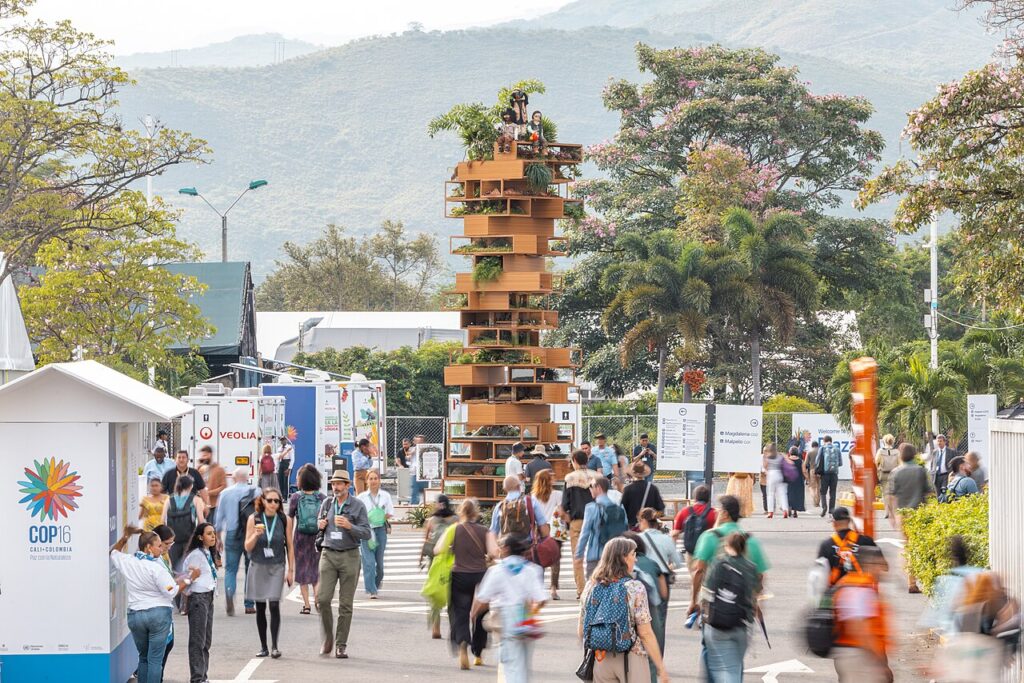
In the early hours of 2 November 2024, in Cali, Colombia, something embarrassing happened at the UN biodiversity conference.
The negotiations ran so long that delegates started leaving to catch flights home. Eventually, so many had gone that the meeting lost its quorum: there weren’t enough countries left in the room to make decisions. The summit was suspended with its most important issue, money, unresolved.
Four months later, in late February 2025, governments reconvened at the headquarters of the UN Food and Agriculture Organization in Rome to finish the job. This time, they reached a deal.
A quick refresher: why nature needs money
In December 2022, the world adopted the Kunming-Montreal Global Biodiversity Framework, sometimes called “the Paris Agreement for nature”. Its headline target, known as “30 by 30”, aims to effectively protect 30% of the world’s land and sea by 2030.
It also set money goals:
- Mobilise US$200 billion a year for biodiversity from all sources by 2030.
- Increase international biodiversity finance to developing countries to at least US$20 billion a year by 2025 and US$30 billion a year by 2030.
Targets are easy to write. The hard question is: how does the money get raised, and who controls it? That’s what Cali couldn’t settle.
What Rome agreed
The resumed COP16 in Rome agreed three key things:
A resource mobilisation strategy to close the biodiversity finance gap, combining public funding, private investment and other sources.
A roadmap toward a permanent financial mechanism for biodiversity, with decisions on long-term arrangements expected later this decade. Developing countries have long argued for a dedicated global biodiversity fund under the convention, while many donor countries prefer using existing funds. The roadmap is a compromise to keep that debate moving.
Monitoring and reporting arrangements, so the world can track whether countries are actually progressing toward the 2030 targets.
It isn’t a cheque. It’s the plumbing that decides where cheques flow and who controls the tap.
Why Kenya should care
Kenya’s economy leans heavily on nature: wildlife tourism, forests, fisheries, rangelands and the water that flows from its forested water towers. When ecosystems degrade, livelihoods follow.
International biodiversity finance can support community conservancies, forest restoration, marine protection and the rangers, scouts and communities who protect them. The plumbing agreed in Rome will shape how much of that money reaches countries like Kenya, and on what terms.
The storytelling challenge
Biodiversity stories have a branding problem.
“Ecosystem services” makes eyes glaze over. “Nature-based solutions” sounds like a consultancy slide. “Resource mobilisation strategy” is a cure for insomnia.
And yet people care deeply about nature: the forest they grew up near, the river they fished in, the animals that define their national identity.
Here’s how I approach biodiversity stories:
Start with a place, not a policy. The Mau Forest, the Tana Delta, the reefs off Watamu, the Maasai Mara. Then explain the policy.
Make the money human. “US$20 billion a year” is abstract. “Funding that pays community scouts in Laikipia” or “money that helps a women’s group restore mangroves in Lamu” is not.
Link nature and climate. Forests store carbon and generate rainfall. Mangroves break storm surges. Wetlands absorb floods. The biodiversity crisis and the climate crisis are one story.
Celebrate the guardians. Indigenous peoples and local communities protect much of the world’s remaining biodiversity. Show them as leaders.
What to watch
The next big moment is COP17, where countries will report on progress toward the 2030 targets. Between now and then, watch for national biodiversity plans and whether the international finance pledges are actually met.
If your organisation works on conservation and wants to tell this story better, whether for donors, policymakers or the public, explore my climate storytelling approach or get in touch. Nature doesn’t need more jargon. It needs more people who can make others feel what’s at stake.
Frequently asked questions
What was agreed at the resumed COP16 in Rome?
Countries agreed a strategy to mobilise biodiversity finance, a roadmap toward a long-term financial mechanism, and arrangements to monitor progress toward the Kunming-Montreal 2030 targets.
What is the “30 by 30” target?
It’s the goal in the Kunming-Montreal Global Biodiversity Framework to effectively conserve 30% of the world’s land and sea by 2030.
Cover photo: Von Wong Productions via Wikimedia Commons (CC BY-SA 2.0)

Impact communications strategist and climate storyteller. Managing Director of Reznick Communications and Founder & CEO of WeAreTELL.