If you had to sum up 2025 in climate in one word, it might be whiplash.
It began with the world’s biggest historical emitter announcing it was leaving the Paris Agreement. It ended with negotiators in the Amazon agreeing to triple adaptation finance, but not to a fossil fuel roadmap. In between came a historic court ruling, a treaty milestone for the ocean, a collapse in plastics talks and a continent declaring itself a land of solutions.
Here are the ten moments I think defined the year.
1. January: Washington walks out
On 20 January, the United States notified the UN that it was withdrawing from the Paris Agreement, with the exit taking effect a year later. The predictions were apocalyptic. The reality, as the year showed, was more complicated: a real blow to finance and diplomacy, but not the end of global cooperation.
2. February: nature gets a money plan
In Rome, the resumed UN biodiversity conference (COP16) agreed a strategy to mobilise and track biodiversity finance, with a roadmap toward a long-term financial mechanism. Not glamorous. But money decides whether the “30 by 30” target is real.
3. April: “Our Power, Our Planet”
Earth Day focused on tripling renewable electricity by 2030, keeping the clean energy story in public view.
4. June: #BeatPlasticPollution
World Environment Day, hosted by the Republic of Korea, put plastic pollution centre stage, two months before the next round of treaty talks.
5. June: the ocean’s big week in Nice
The third UN Ocean Conference, co-hosted by France and Costa Rica, generated momentum for ocean protection, and a wave of ratifications for the High Seas Treaty.
6. July: the world court speaks
On 23 July, the International Court of Justice delivered its unanimous advisory opinion: states have binding legal obligations to protect the climate system, and breaching them can be an internationally wrongful act. The journey started in 2019 with law students in the Pacific. For me, this was the climate justice story of the year.
7. August: plastics talks collapse again
Ten days of negotiations in Geneva ended on 15 August without a treaty, after a determined minority of countries blocked limits on plastic production. A sobering lesson in how consensus can be weaponised.
8. September: Africa speaks with one voice
From 8 to 10 September, Addis Ababa hosted the second Africa Climate Summit, closing with the Addis Ababa Declaration. The framing had shifted: Africa not as a victim, but as a continent of solutions demanding a fairer financial system. I was there, and the energy in the halls was remarkable.
9. September: the High Seas Treaty crosses the line
The High Seas Treaty reached 60 ratifications, setting up its entry into force in January 2026. Nearly half the planet’s surface would finally have a legal framework for protecting marine life.
10. November: COP30 in the Amazon
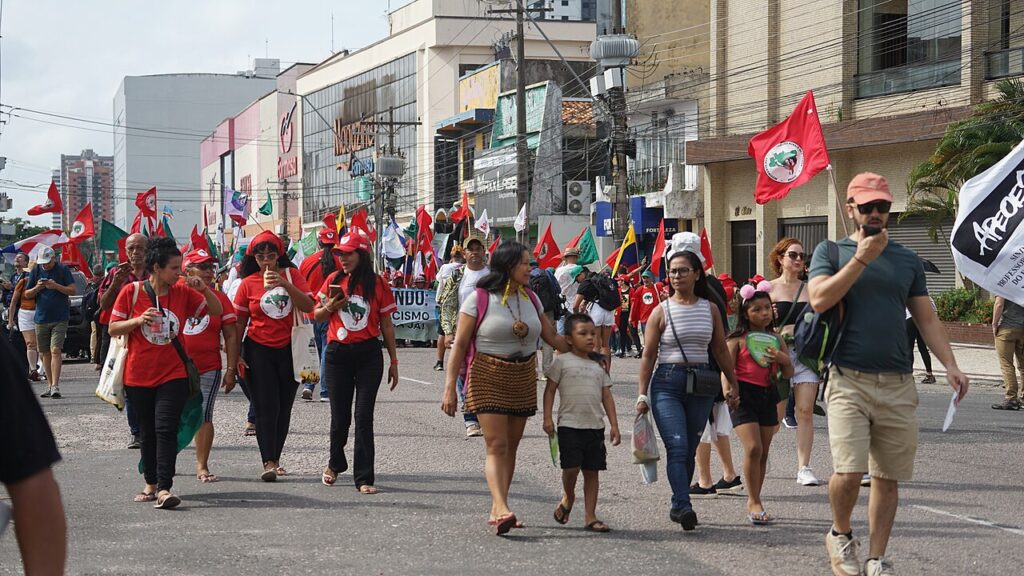
In Belém, countries agreed the “Global Mutirão” decision, called for at least tripling adaptation finance by 2035, adopted indicators for the Global Goal on Adaptation and launched work on a just transition mechanism. Brazil’s Tropical Forest Forever Facility launched with early pledges. A fossil fuel transition roadmap, backed by many countries, didn’t make the final text.
What 2025 taught storytellers
Process stories need human anchors. Treaties, courts and finance decisions only became compelling when we told them through people: the Pacific law students, the waste pickers, the forest guardians.
Doom fatigue is real. Audiences tuned out of pure alarm. They leaned in to agency, solutions and accountability.
Nuance is a skill, not a weakness. The most important stories of the year, the US exit, COP30, the plastics collapse, were neither total victories nor total failures. Communicators who could explain the grey areas earned trust.
Africa’s voice is getting louder. From Addis to Belém, the continent increasingly set its own narrative.
Looking ahead
2026 brings the High Seas Treaty into force, the US exit taking effect, mid-year talks in Bonn and COP31 in Antalya, Türkiye. And in 2027, COP32 comes to Ethiopia.
Thank you for reading and sharing my work this year. In 2026, I’m going deeper into teaching through ImpactComms and continuing to moderate and speak at events across Africa and beyond.
Frequently asked questions
What were the biggest climate moments of 2025?
Highlights included the US Paris withdrawal notice, the ICJ advisory opinion, the High Seas Treaty reaching 60 ratifications, the Africa Climate Summit in Addis Ababa and COP30 in Belém.
What did 2025 teach climate communicators?
That process stories need human anchors, that audiences respond to agency more than doom, and that Africa’s climate voice is growing in confidence.
Cover photo: Xuthoria via Wikimedia Commons (CC BY-SA 4.0)

Impact communications strategist and climate storyteller. Managing Director of Reznick Communications and Founder & CEO of WeAreTELL.