For decades, there was a particular way the world told Africa’s climate story. You know the images. Cracked earth. Dead cattle. Families in a dust storm. A child holding an empty jerrycan.
Those images reflect real suffering. But they told only one story, a story of a continent waiting to be rescued.
This week in Addis Ababa, African leaders told a different one.
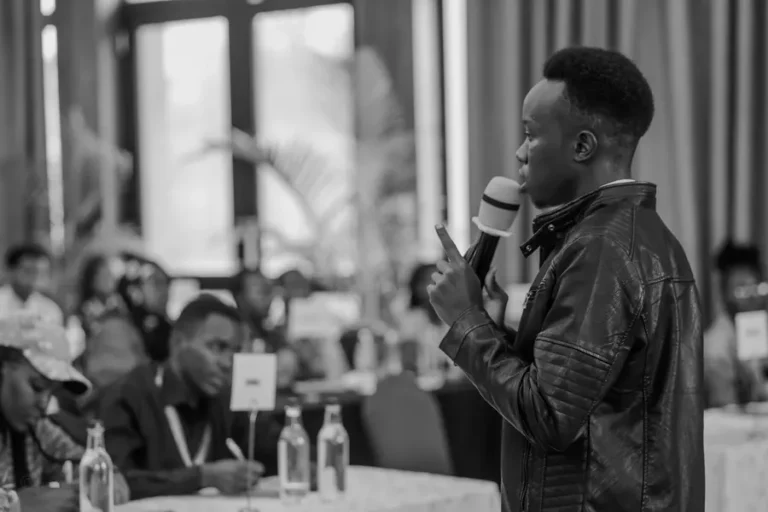
From 8 to 10 September 2025, the Ethiopian capital hosted the second Africa Climate Summit, two years after the first one in Nairobi produced the Nairobi Declaration. Heads of state, ministers, investors, scientists, youth leaders, artists and civil society filled the halls. I was there, working on climate storytelling, and the shift in tone was impossible to miss.
The message, repeated in session after session: Africa is not just where the climate crisis hits hardest. It’s where solutions are being built.
The Addis Ababa Declaration
The summit closed with the Addis Ababa Declaration. Its big themes:
Fix the financial system
This is the quiet centre of everything. Many African countries pay far higher interest rates to borrow than richer countries do. That makes every solar farm, every irrigation scheme, every climate-resilient road dramatically more expensive.
African leaders called again for reform of the global financial architecture: fairer access to capital, debt relief linked to climate action and more grant-based adaptation finance.
Adaptation first
For a continent already living with drought, floods and extreme heat, adaptation isn’t a future concern. It’s survival. The declaration pushed for adaptation to get its fair share of climate finance.
Homegrown innovation and finance
The summit emphasised African solutions: clean cooking, renewable mini-grids, climate-smart agriculture, green industrialisation. And African institutions to finance them.
A united voice for Belém
With COP30 two months away, the declaration helps align African positions going into the negotiations.
From Nairobi to Addis
In 2023, the Nairobi Declaration put a bold idea into global conversation: Africa as a green industrial powerhouse, with the renewable energy, minerals and young workforce to lead the transition.
Addis built on that, with a stronger focus on implementation and on homegrown financing tools.
Why the framing matters so much
Stories shape money.
If investors only see Africa through images of disaster, capital stays away, or comes only at punishing interest rates. If policymakers only see African countries as aid recipients, they don’t treat them as partners in designing solutions. If young Africans only see their continent as a victim, they lose sight of what they can build.
Reframing Africa as a continent of solutions isn’t public relations. It’s economic and political strategy.
As a climate storyteller, I think this is long overdue. And it comes with a responsibility: solution stories must be backed by evidence. Hype is just as damaging as despair.
What happens next
Declarations are easy to sign. The test is what happens afterwards.
- Will African positions shape the outcome in Belém?
- Will the financial reforms move at the IMF, the World Bank and the G20?
- Will adaptation finance actually reach African communities?
- Will homegrown finance institutions scale up?
What organisations can do now
Tell solution stories with evidence. Show what works, with data, costs and results.
Elevate African experts. As sources, speakers and authors, not just case studies.
Track the commitments. Someone needs to follow up. It might as well be you.
I’ll be revisiting the Addis Ababa Declaration over the coming year to see what’s moved. If you’re organising an event on African climate leadership, let’s talk about moderation and speaking.
Frequently asked questions
When was the second Africa Climate Summit?
It was held in Addis Ababa, Ethiopia, from 8 to 10 September 2025, and closed with the Addis Ababa Declaration.
What is the main message of the Addis Ababa Declaration?
It frames Africa as a continent of climate solutions and calls for reform of global finance, more adaptation support and investment in African innovation.
Cover photo: Simfan34 via Wikimedia Commons (CC BY-SA 3.0)

Impact communications strategist and climate storyteller. Managing Director of Reznick Communications and Founder & CEO of WeAreTELL.