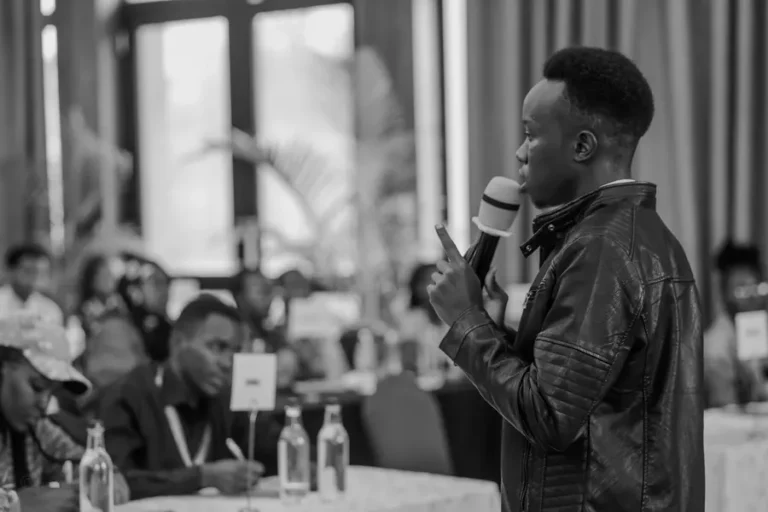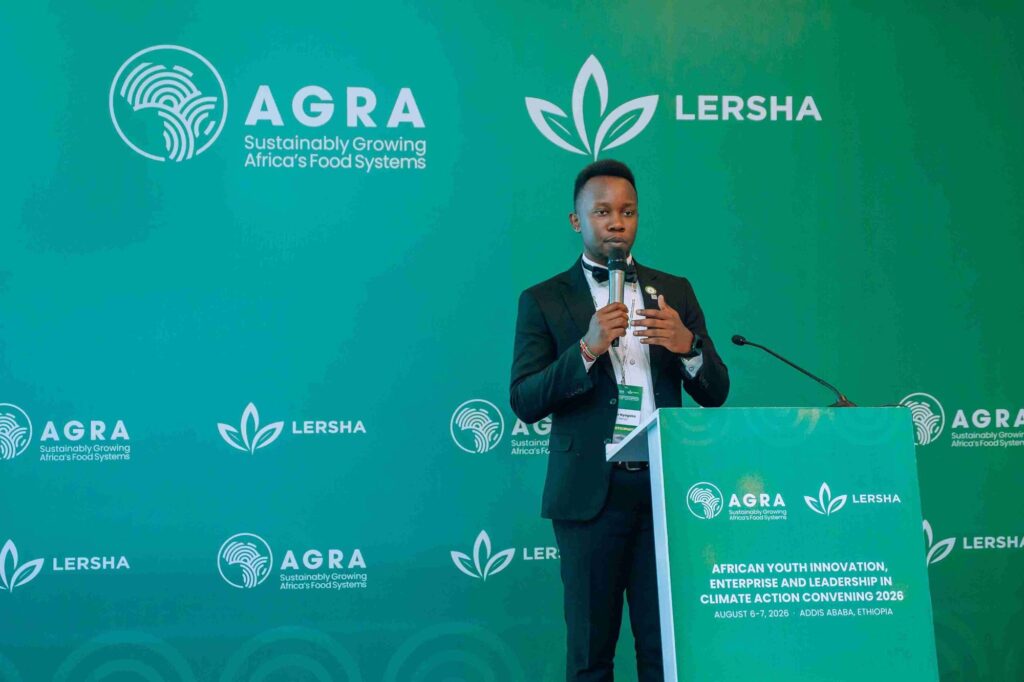
Addis Ababa sits high on a plateau, more than 2,300 metres above sea level. The air is thin, and if you’ve flown in from Nairobi the night before, the first flight of stairs reminds you. By mid-morning on the first day of the convening, nobody in the hall seemed to notice. The room was buzzing.
I was there in early August for the African Youth Innovation, Enterprise & Leadership in Climate Action Convening 2026, speaking and documenting with WeAreTELL. The theme on the banners was a mouthful: scaling youth-led solutions for resilient food systems, climate action and green prosperity in Africa. The idea underneath it was simple. The people building Africa’s climate solutions are increasingly young, and they need the system to catch up with them.
The room
Here’s who you’d meet walking between sessions.
Founders working on climate-smart agriculture and digital farming tools. Young people running restoration projects on degraded land. Agribusiness entrepreneurs trying to cut post-harvest losses. Climate-tech builders. And, around them, the people who can make or break a young venture: policymakers, investors, development partners and programme officers.
What struck me wasn’t the novelty of the ideas. It was how many of them were already operating: with customers, staff, revenue and real data from the field. These weren’t pitch-deck dreams. They were businesses and initiatives looking for the next step.
The wall everyone keeps hitting
If you listened carefully, the same words came up in session after session: finance, markets, technology, skills, partnerships, policy.
The way one founder might put it over coffee: too big for grants, too small for investors. Early-stage youth ventures can win a small competition prize or a pilot grant. But the jump to the next stage, the working capital to serve a whole county, the equipment to process at scale, the export certification, falls into a gap that few funders fill.
This is sometimes called the “missing middle”, and in African climate entrepreneurship it’s not a gap. It’s a canyon.
Food systems are climate systems
One idea ran through the whole convening, and I think it’s one of the most important framings in African climate conversations right now.
Agriculture employs a large share of Africans. It’s highly exposed to climate change: shifting rains, longer droughts, new pests, heat stress on crops and livestock. And it’s a source of emissions too, through land clearing, livestock and fertiliser.
That means every young person improving how food is grown, stored, processed or sold is doing climate work, even if they never use the word “climate” in their pitch.
The conversation that stayed with me
One of the biggest discussions was about the role of digital technology and media in scaling agriculture and climate solutions.
This is the part where I lean forward, because it’s my world.
I’ve lost count of the brilliant solutions I’ve seen stay small because nobody outside a few villages knew they existed. A founder spends three years perfecting a product and three hours on the story that’s supposed to sell it to investors, buyers and governments.
Storytelling is infrastructure. If an investor can’t understand what you do in thirty seconds, they won’t take the meeting. If a county government can’t see the evidence that your approach works, it won’t adopt it. If a farmer can’t hear about you from someone they trust, they won’t try it.
That’s the gap WeAreTELL works in: helping young founders and organisations build visibility, document their impact and tell their story clearly.
What organisations should take from Addis
If you work in a foundation, a development agency, a government ministry or a corporate sustainability team, here’s what I’d want you to hear.
Fund the middle. Patient, flexible capital that fits early-growth ventures: blended finance, guarantees, revenue-based financing, larger follow-on grants for proven pilots.
Invest in skills that unlock everything else. Pitching, financial management, policy engagement and communication are not “soft skills” for young founders. They’re survival skills.
Buy from them. Procurement can be more powerful than grants. A county contract or a corporate supply agreement changes a young business overnight.
Create real platforms, not photo opportunities. Convenings matter when they connect young innovators to people with decision-making power, and when someone follows up afterwards.
Why this matters more next year
Ethiopia will host COP32 in 2027. The world’s climate summit will come to the same country where these founders gathered. When it does, the question will be whether African youth are on the stage, or just in the photos.
Judging by the energy in that room in Addis, they’re ready. The rest of us need to make sure the doors are open.
Thank you to the organisers and partners for creating the space, and to the young innovators who shared their work so generously. See photos in the gallery, more of the events I’ve been part of, and read about how to design a youth convening that young people actually want to attend.
Frequently asked questions
What was the Addis Ababa youth climate convening?
The African Youth Innovation, Enterprise & Leadership in Climate Action Convening, held 5–7 August 2026, focused on scaling youth-led solutions for food systems, climate action and green prosperity.
What do young climate entrepreneurs in Africa need most?
Patient, stage-appropriate finance, access to markets, policy support and communication skills to explain and scale their solutions.
Cover photo: Blair Reznick / WeAreTELL archive

Impact communications strategist and climate storyteller. Managing Director of Reznick Communications and Founder & CEO of WeAreTELL.